
Chevrolet Bolt EV vs. Nissan Leaf: A 2026 Insurance Cost Comparison
Considering an affordable electric vehicle? This in-depth analysis breaks down the expected insurance costs for the Chevrolet Bolt EV and Nissan Leaf in 2026, helping you understand the factors that drive premiums.

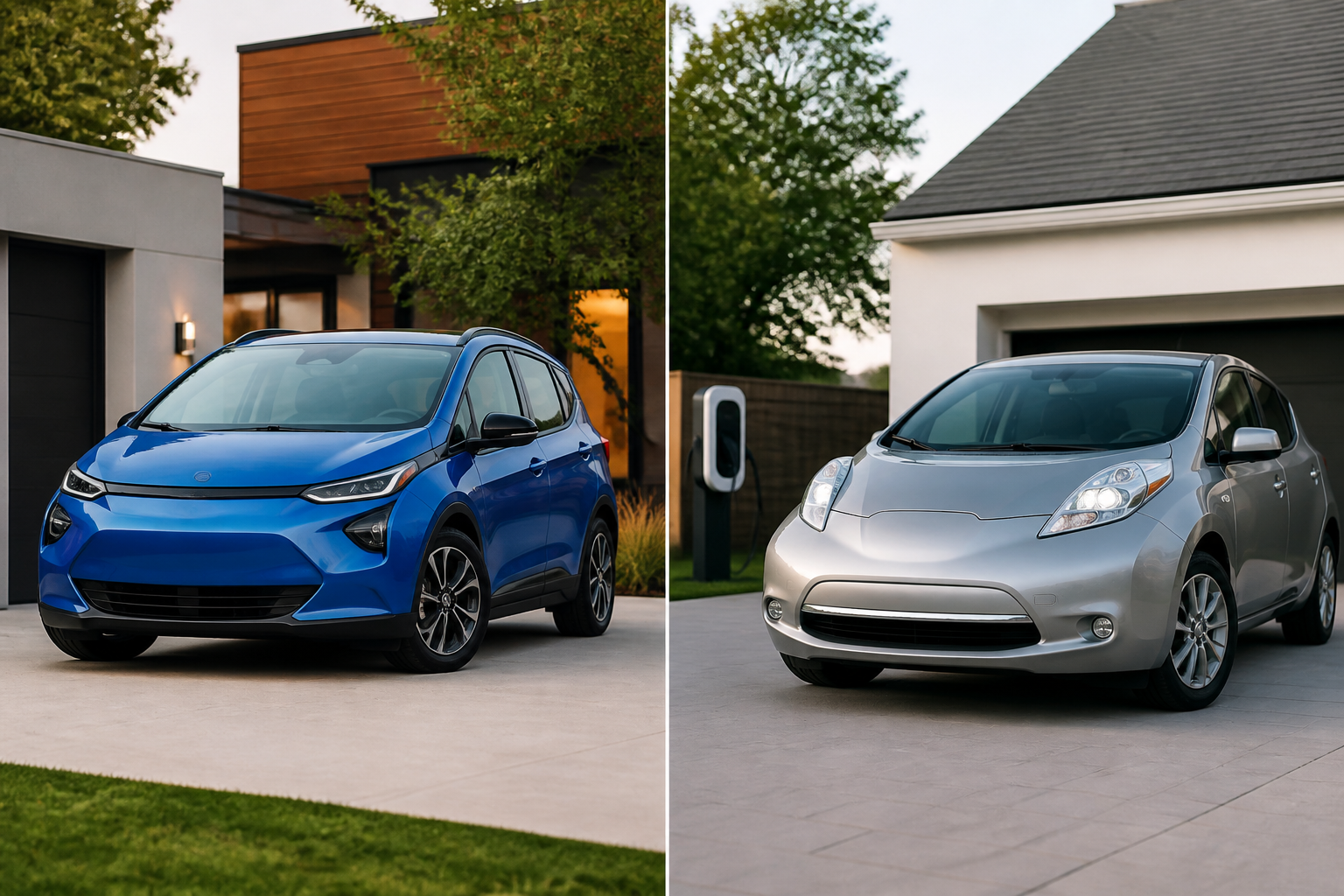
As electric vehicles become more accessible, many consumers are weighing the total cost of ownership, with insurance being a significant component. For those seeking an entry point into the EV market, the Chevrolet Bolt EV and Nissan Leaf have historically been popular choices. This article provides a rigorous, data-backed comparison of projected insurance costs for these two mass-market EVs in 2026, dissecting the underlying factors that contribute to premium differences.
Introduction to Affordable EV Insurance
The landscape of electric vehicle insurance is continuously evolving, influenced by technological advancements, market penetration, and the increasing repair infrastructure. While luxury EVs often come with higher insurance premiums due to their advanced technology, high-performance capabilities, and expensive components, more budget-friendly options like the Chevrolet Bolt EV and Nissan Leaf present a different insurance profile. These models are often seen as practical, commuter-friendly vehicles, which can translate to more favorable insurance rates compared to their premium counterparts.
However, 'affordable' is a relative term, and even within this segment, significant variations can exist. Insurers assess risk based on a multitude of factors, including the vehicle's MSRP, safety features, repair costs, parts availability, and theft rates. For 2026, we anticipate continued refinement in how insurers underwrite policies for these established EV models, moving beyond the initial uncertainty that sometimes inflated early EV premiums. Our analysis will focus on how the specific attributes of the Bolt EV and Nissan Leaf, which have been on the market for several years, are likely to influence their insurance costs.
It's crucial to understand that while general trends and averages can be identified, individual insurance premiums are highly personalized. Your driving history, location, chosen coverage limits, and even credit score will play a substantial role in the final quote you receive. This comparison aims to provide a foundational understanding of how these two vehicles stack up against each other from an insurance perspective, allowing you to make a more informed decision.
Understanding EV Insurance Cost Drivers
The cost of insuring any vehicle, electric or otherwise, is determined by a complex algorithm that assesses risk. For electric vehicles, several specific factors often carry more weight than for traditional internal combustion engine (ICE) cars. Understanding these drivers is key to deciphering the differences between models like the Bolt EV and the Leaf.
- Vehicle Purchase Price (MSRP): Generally, more expensive vehicles cost more to insure because the potential payout for total loss or significant damage is higher. Both the Bolt EV and Leaf are positioned as more affordable EVs, which can be a positive factor for insurance.
- Repair Costs and Complexity: EVs often feature specialized components like high-voltage battery packs, electric motors, and advanced power electronics. Repairs to these systems can be more expensive and require specialized technicians and equipment, driving up labor and parts costs.
- Parts Availability: If specific EV parts are proprietary or have long lead times, repair costs can increase due to extended rental car needs and higher part prices.
- Battery Pack Replacement/Repair: The battery is the most expensive single component in an EV. While often protected, significant impact damage to the battery can lead to very high repair or replacement costs, which insurers factor into premiums.
- Safety Features and Ratings: Vehicles with strong safety ratings and advanced driver-assistance systems (ADAS) can sometimes qualify for discounts, as they are statistically less likely to be involved in accidents or mitigate damage effectively.
- Theft Rates: While EVs generally have lower theft rates than some popular ICE vehicles, the value of their components can still make them targets.
- Claim Frequency and Severity: Insurers track historical data on how often and how severely a particular model is involved in accidents. Models with higher claim frequency or severity will typically have higher premiums.
For the Chevrolet Bolt EV and Nissan Leaf, their relatively longer presence in the market means insurers have accumulated substantial data on their repair costs, claims, and overall risk profiles. This historical data tends to lead to more stable and predictable premiums compared to brand-new EV models.
Chevrolet Bolt EV: Insurance Profile
The Chevrolet Bolt EV, first introduced in 2017, has been a cornerstone of GM's electrification strategy, offering a practical and relatively spacious electric hatchback. By 2026, the Bolt EV (and its EUV variant) will have a well-established insurance profile, with years of claims data informing underwriters.
Key factors influencing Bolt EV insurance costs:
- MSRP: The Bolt EV typically falls into a lower-to-mid price bracket for new EVs, which is a positive for insurance affordability.
- Repairability: Early concerns about EV repair costs have somewhat stabilized for models like the Bolt. While battery pack damage remains a high-cost item, general bodywork and component replacement for the Bolt EV are becoming more familiar to repair shops. However, specific high-voltage component repairs still require specialized training and tools, potentially increasing labor costs.
- Parts Availability: As a mass-market vehicle from a major manufacturer like General Motors, parts availability for the Bolt EV is generally robust. This helps to mitigate extended repair times and high part sourcing costs, which can otherwise inflate premiums.
- Safety Features: The Bolt EV typically comes with a suite of standard safety features, and higher trims often include advanced driver-assistance systems (ADAS) like automatic emergency braking, lane-keeping assist, and adaptive cruise control. These features can contribute to lower collision claim frequencies and severity, potentially leading to discounts. The Bolt EV has generally performed well in crash tests by organizations like the IIHS and NHTSA.
- Battery Recalls: The widely publicized battery recall for certain Bolt EV models due to fire risk initially caused some concern among insurers. However, by 2026, the vast majority of affected vehicles are expected to have received their battery replacements, mitigating this specific risk factor and allowing insurers to return to more standard underwriting based on updated battery technology.
In 2026, we project that the Chevrolet Bolt EV will likely maintain a competitive insurance position within the EV segment. Its long production run and established repair network contribute to a more predictable risk profile. Average annual premiums for a Bolt EV in 2026 are estimated to range from $1,800 to $2,600, depending heavily on the driver's profile, location, and coverage choices. This range reflects the vehicle's solid safety ratings, reasonable parts availability from a major OEM, and its positioning as a practical, rather than luxury, EV.
Nissan Leaf: Insurance Profile
The Nissan Leaf holds the distinction of being one of the first mass-market electric vehicles globally, giving it a very long history for insurers to analyze. The Leaf has undergone several generations, with the second generation (introduced in 2018) being the most relevant for 2026 insurance projections. Its identity as an accessible and reliable EV has shaped its insurance profile significantly.
Key factors influencing Leaf insurance costs:
- MSRP: Similar to the Bolt EV, the Nissan Leaf is positioned as an affordable entry into the EV market. Its lower starting price compared to many other EVs helps keep insurance premiums relatively modest.
- Repairability: The Leaf's repair infrastructure is arguably the most mature among all EVs, given its pioneering status. Nissan dealerships and independent repair shops have had over a decade to familiarize themselves with its electric powertrain and components. This widespread familiarity can contribute to lower labor costs and quicker repair times compared to newer, more complex EV architectures.
- Parts Availability: As a global best-seller for many years, parts for the Nissan Leaf are generally readily available through Nissan's extensive supply chain. This reduces the risk of expensive delays or specialized sourcing for components.
- Safety Features: The Leaf has consistently earned good safety ratings from organizations like the IIHS. Modern Leaf models come equipped with Nissan's Safety Shield 360, a suite of advanced driver-assistance systems that includes automatic emergency braking with pedestrian detection, blind-spot warning, rear cross-traffic alert, and lane departure warning. These features are strong mitigating factors for insurance risk.
- Battery Technology: While early Leaf models used air-cooled batteries that experienced faster degradation in hot climates, later generations (and certainly by 2026) have improved thermal management. Insurers will have extensive data on battery longevity and associated risks, leading to a more accurate assessment of long-term claims potential.
For 2026, the Nissan Leaf is expected to continue its trend of offering competitive insurance rates, primarily due to its long market presence, widespread repair knowledge, and established parts supply chain. Projected average annual premiums for a Nissan Leaf in 2026 are estimated to be in the range of $1,750 to $2,550. This range is slightly lower or comparable to the Bolt EV, reflecting its potentially more accessible repair network and long track record of reliability.
Direct Cost Comparison: Bolt vs. Leaf
When directly comparing the Chevrolet Bolt EV and the Nissan Leaf for 2026 insurance costs, we observe a nuanced picture, with both vehicles generally falling into a similar affordable EV insurance bracket. Based on current trends and projected market conditions, the differences in average premiums are likely to be marginal, influenced more by specific model year, trim level, and individual driver characteristics than by a stark vehicle-specific disparity.
Projected 2026 Annual Insurance Premium Ranges:
- Chevrolet Bolt EV: $1,800 - $2,600
- Nissan Leaf: $1,750 - $2,550
These ranges represent national averages for a driver with a clean record and good credit, opting for comprehensive coverage. It's important to reiterate that specific quotes will vary widely.
Factors contributing to potential differences:
- Repair Complexity and Parts Cost: While both are mass-market, the Leaf's longer tenure and simpler architecture (especially earlier generations) might give it a slight edge in repair cost predictability and parts availability in some regions, potentially translating to marginally lower premiums. The Bolt EV, particularly the EUV, might have slightly more complex body structures or sensor placements that could increase repair bills for minor collisions.
- Safety Features and ADAS Integration: Both vehicles offer robust safety suites. The effectiveness of these systems in preventing or mitigating accidents, as reflected in real-world claims data, will continue to influence premiums. If one vehicle's ADAS proves statistically more effective, it could see a slight advantage.
- Theft Rates: Historically, neither vehicle has been a high-theft target. Any future shifts in theft trends for specific EV models could impact premiums.
- Vehicle Value Depreciation: As these models age, their market value (and thus the cost to replace them in a total loss scenario) will decrease. This depreciation can lead to slightly lower comprehensive and collision premiums over time, assuming repair costs don't disproportionately increase.
In essence, for 2026, both the Chevrolet Bolt EV and Nissan Leaf are expected to remain strong contenders for drivers seeking relatively affordable EV insurance. The choice between the two from an insurance perspective will likely come down to minor regional variations in repair networks and the specific trim level chosen, rather than a clear-cut winner across the board. Consumers should obtain quotes for both vehicles with their specific details to ascertain the true cost difference for their situation.
Factors Influencing Your Personal Premium
While the vehicle itself is a major determinant of insurance costs, your personal circumstances and choices play an equally, if not more, significant role. Understanding these variables is crucial for accurately estimating your 2026 Chevrolet Bolt EV vs. Nissan Leaf insurance costs.
Here are the primary individual factors that influence your premium:
- Driver Demographics: Age, gender, marital status, and years of driving experience all impact premiums. Younger, less experienced drivers typically pay more.
- Driving Record: A clean driving record free of accidents, speeding tickets, or other violations is paramount for lower rates. Incidents on your record will significantly increase your premiums.
- Location (Zip Code): Insurance rates vary dramatically by geographic area. Urban areas with higher traffic density, theft rates, or vandalism often have higher premiums than rural areas. Even within a city, different zip codes can have vastly different rates.
- Annual Mileage: Drivers who log fewer miles annually are generally considered lower risk and may qualify for discounts.
- Credit Score (in most US states): In many states, insurers use a credit-based insurance score as a predictor of future claims. A higher credit score often correlates with lower premiums.
- Coverage Limits and Deductibles: Choosing higher liability limits provides more protection but increases your premium. Similarly, lower deductibles (the amount you pay out-of-pocket before insurance kicks in) for comprehensive and collision coverage will result in higher premiums, and vice-versa.
- Insurance Company: Different insurers have different underwriting models and risk appetites. This is why comparing quotes from multiple providers is always recommended.
- Discounts: Many insurers offer a variety of discounts, such as multi-policy discounts (bundling auto and home insurance), good student discounts, anti-theft device discounts, and EV-specific discounts.
- Usage: Whether the vehicle is used for commuting, pleasure, or business can affect rates. Ride-sharing or delivery services typically require specialized, more expensive coverage.
For example, a 30-year-old driver with a clean record living in a suburban area of Ohio might pay significantly less for either a Bolt EV or a Leaf than a 20-year-old driver with a recent speeding ticket living in downtown Los Angeles, even for the exact same vehicle. These personal factors often create a much larger variance in premiums than the inherent differences between two comparable vehicle models like the Bolt EV and Leaf.
Optimizing Your EV Insurance Costs
Regardless of whether you choose a Chevrolet Bolt EV or a Nissan Leaf, there are several proactive steps you can take to minimize your insurance premiums in 2026 and beyond. A strategic approach to purchasing and managing your policy can lead to substantial savings.
Here are actionable strategies to optimize your EV insurance costs:
- Shop Around Extensively: This is arguably the most impactful step. Obtain quotes from at least 3-5 different insurance providers. Rates can vary by hundreds, even thousands, of dollars for the same coverage, as each insurer has its own proprietary risk assessment models. Utilize online comparison tools, but also consider reaching out to independent agents who can shop multiple carriers for you.
- Bundle Your Policies: Most insurers offer significant discounts (often 10-20%) if you bundle your auto insurance with other policies, such as home, renters, or umbrella insurance.
- Maintain a Clean Driving Record: Avoid accidents and traffic violations. A history of safe driving is the single best way to secure and maintain low insurance rates.
- Increase Your Deductibles: Opting for higher deductibles (e.g., $1,000 instead of $500) for comprehensive and collision coverage can substantially lower your premium. Just ensure you have sufficient savings to cover the deductible if you need to make a claim.
- Take Advantage of Discounts: Inquire about all available discounts. Common ones include: multi-car, good student, anti-theft devices, safe driver programs (telematics), paying in full, paperless billing, and EV-specific discounts. Some insurers offer discounts for vehicles with advanced safety features.
- Improve Your Credit Score: In states where it's permitted, a higher credit score can lead to lower insurance premiums. Regularly check your credit report and work to improve it if necessary.
- Consider Usage-Based Insurance (UBI): Many insurers offer telematics programs where a device or app tracks your driving habits (speed, braking, mileage). If you're a safe driver, these programs can offer significant discounts.
- Review Your Coverage Annually: Your insurance needs change over time. As your EV ages, its market value depreciates, and you might consider reducing comprehensive or collision coverage if the cost of insurance outweighs the potential payout for an older, less valuable vehicle.
- Install Safety and Anti-Theft Devices: Beyond factory-installed features, adding approved aftermarket anti-theft systems can sometimes qualify you for additional discounts.
By diligently applying these strategies, you can significantly mitigate the costs associated with insuring your Chevrolet Bolt EV or Nissan Leaf, ensuring that your electric vehicle remains an economically sound choice for years to come.
The decision between a Chevrolet Bolt EV and a Nissan Leaf in 2026, from an insurance perspective, is likely to be a close call. Both vehicles offer relatively competitive insurance rates within the EV segment, benefiting from their established market presence and growing repair infrastructure. While the Nissan Leaf might hold a slight edge in some scenarios due to its longer history and potentially simpler repair profiles, the Bolt EV remains a strong contender. Ultimately, the most significant determinant of your premium will be your personal driving profile, location, and the specific insurance provider you choose. Always prioritize getting multiple quotes to find the best coverage at the most favorable rate for your individual circumstances.
Key takeaways
- Chevrolet Bolt EV and Nissan Leaf are projected to have similar, competitive insurance costs in 2026, generally ranging from $1,750 to $2,600 annually.
- The Leaf's longer market history and established repair network may offer a slight edge in repair cost predictability and parts availability, potentially leading to marginally lower premiums in some cases.
- Both vehicles benefit from robust safety features and strong crash test ratings, which positively influence insurance rates.
- Individual factors like driving record, location, age, and chosen coverage have a far greater impact on personal premiums than the minor differences between these two EV models.
- Shopping around for quotes from multiple insurers and leveraging available discounts are the most effective ways to optimize your EV insurance costs for either vehicle.
Frequently asked questions
Q.Are electric vehicles more expensive to insure than gasoline cars?
Generally, electric vehicles can be slightly more expensive to insure due to higher purchase prices, specialized and costly components like battery packs, and potentially higher repair costs requiring specialized technicians. However, this gap is narrowing as EVs become more common and repair infrastructure improves.
Q.Why might the Nissan Leaf have slightly lower insurance costs than the Chevrolet Bolt EV?
The Nissan Leaf's longer market presence means insurers have more historical data on its claims and repair costs, which can lead to more predictable and potentially lower premiums. Its established repair network and simpler architecture compared to some newer EVs may also contribute to lower repair labor costs and parts availability.
Q.What factors specific to EVs increase insurance costs?
Key EV-specific factors include the high cost of battery pack replacement, specialized components (motors, power electronics) that require expert repair, and the initial higher MSRP compared to equivalent gasoline models. The cost and availability of specific EV parts can also influence premiums.
Q.Can I get discounts for insuring an EV?
Yes, many insurers offer discounts for EVs, particularly those equipped with advanced safety features. You can also qualify for standard discounts like multi-policy, good driver, low mileage, and anti-theft device discounts. Inquire with your insurer about all available EV-specific and general discounts.
Q.How much will my personal insurance premium vary from the averages cited?
Your personal premium can vary significantly from national averages due to factors like your age, driving record, geographic location (zip code), chosen coverage limits and deductibles, and even your credit score. Always obtain personalized quotes from multiple insurers for the most accurate estimate.
References
Automotive journalist with 10+ years road-testing EVs and tracking model-by-model ownership costs.
Continue reading

Tesla Model Y Insurance Costs: What Owners Should Compare at Renewal: 2026-10-18 Update 1
Model-specific renewal checklist covering trim, location, repair networks, and driver-assistance assumptions. This is a fresh 2026-10-18 update: focus on what has changed recently, new data points, and current-year guidance — do not repeat the earlier article's coverage. Use this checklist to compare premiums, deductibles, repair support, and policy wording before renewal.

Tesla Model Y Insurance Costs: What Owners Should Compare at Renewal: 2026-10-17 Update 2
Model-specific renewal checklist covering trim, location, repair networks, and driver-assistance assumptions. This is a fresh 2026-10-17 update: focus on what has changed recently, new data points, and current-year guidance — do not repeat the earlier article's coverage. Use this checklist to compare premiums, deductibles, repair support, and policy wording before renewal.

Tesla Model Y Insurance Costs: What Owners Should Compare at Renewal: 2026-10-16 Update 3
Model-specific renewal checklist covering trim, location, repair networks, and driver-assistance assumptions. This is a fresh 2026-10-16 update: focus on what has changed recently, new data points, and current-year guidance — do not repeat the earlier article's coverage. Use this checklist to compare premiums, deductibles, repair support, and policy wording before renewal.