
EV Battery Health & Insurance: How Degradation Affects Your Premiums and Payouts
As electric vehicles age, their high-voltage batteries naturally degrade. This article investigates how this degradation might influence your EV insurance premiums and the valuation of your vehicle in the event of a claim.

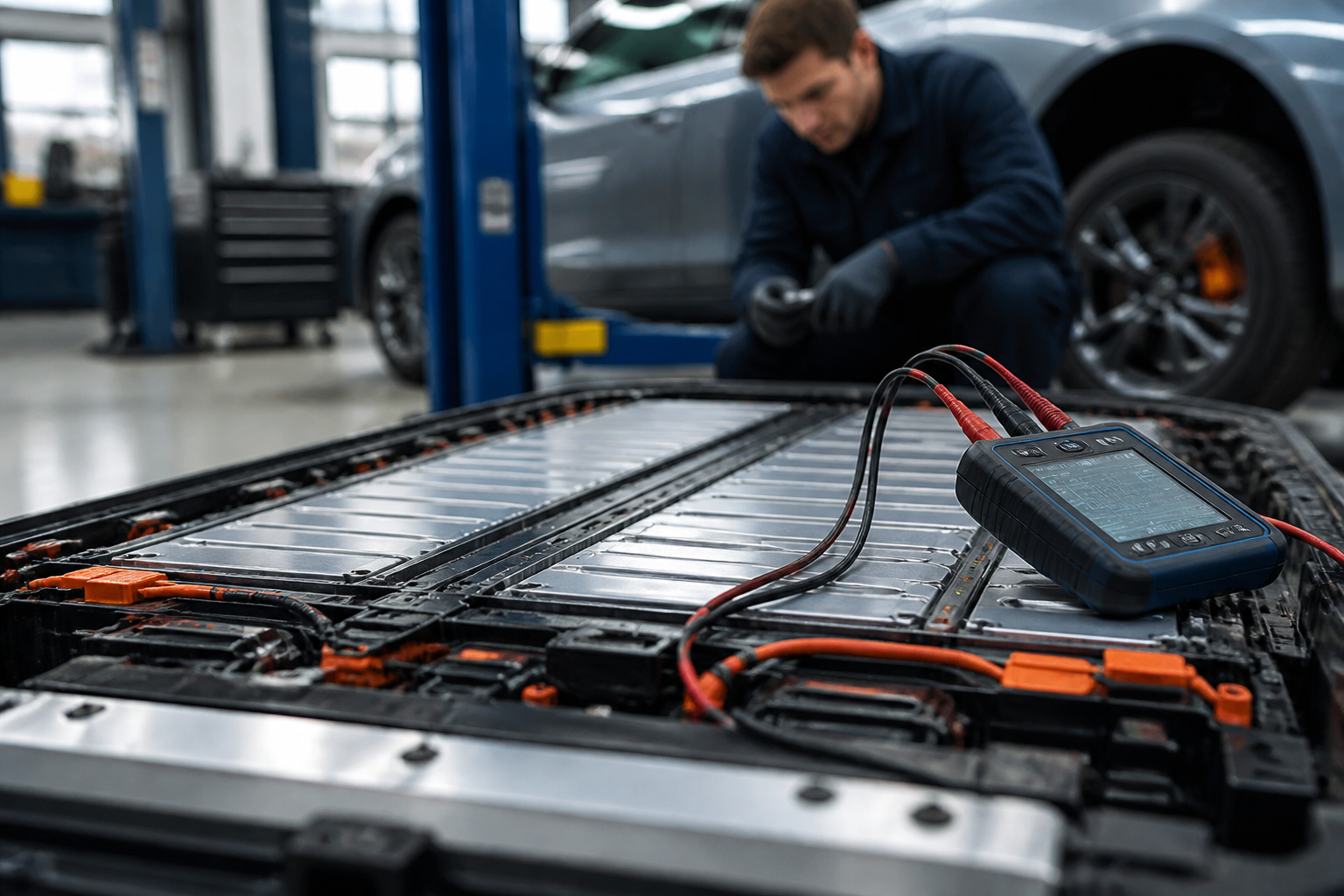
The heart of any electric vehicle (EV) is its high-voltage battery. While these batteries are designed for longevity, they naturally experience a gradual reduction in capacity over time and use, a phenomenon known as degradation. For EV owners, particularly those with older vehicles, a critical question arises: how does EV battery degradation insurance affect my premiums and potential claim payouts? This article will delve into the complex relationship between battery health, vehicle valuation, and the evolving landscape of EV insurance.
Understanding EV Battery Degradation
EV battery degradation refers to the irreversible loss of a battery's maximum energy storage capacity and power delivery capability. This is a normal part of a battery's lifecycle, much like an internal combustion engine (ICE) vehicle's engine naturally wears over time. Several factors contribute to this process, including:
- Cycle Age: Each charge and discharge cycle contributes to degradation. The more cycles a battery undergoes, the more it degrades.
- Calendar Age: Even if an EV isn't driven much, the battery still ages over time due to chemical processes.
- Temperature Extremes: Prolonged exposure to very high or very low temperatures can accelerate degradation. Most EVs have thermal management systems to mitigate this, but extreme conditions still play a role.
- Charging Habits: Frequent fast charging (DCFC) and regularly charging to 100% or discharging to 0% can put more stress on the battery, leading to faster degradation compared to slower charging and maintaining a charge between 20% and 80%.
- Driving Style: Aggressive driving that demands high power output can also contribute to battery stress.
Modern EV batteries are remarkably robust, often retaining 70-80% of their original capacity after 8-10 years or 100,000-150,000 miles, a figure often guaranteed by manufacturers' warranties. However, beyond these warranty periods, or for batteries experiencing accelerated degradation, the impact on the vehicle's overall value and utility becomes more pronounced.
Insurers' Perspective on Battery Health
From an insurer's viewpoint, the high-voltage battery is the single most expensive component of an EV. Its condition directly impacts the vehicle's market value and the potential cost of repairs or replacement in the event of a total loss. Insurers are primarily concerned with:
- Replacement Cost: A new EV battery pack can cost anywhere from $5,000 to over $20,000, depending on the vehicle model and battery capacity. This significantly exceeds the cost of replacing many ICE vehicle components.
- Repairability: While some battery packs are designed for modular repair, others require full replacement even for minor cell damage, increasing repair complexity and cost.
- Vehicle Valuation: A severely degraded battery reduces the resale value of an EV. In the event of a total loss, the insurer must determine the actual cash value (ACV) of the vehicle, and battery health is a crucial factor.
- Accident Risk (Indirect): While battery degradation doesn't directly cause accidents, a vehicle with significantly reduced range might lead to range anxiety, potentially influencing driver behavior or vehicle usage patterns.
Currently, most insurance policies treat the EV battery as an integral part of the vehicle, similar to an engine or transmission. However, as the EV market matures and older vehicles become more common, insurers are beginning to explore more nuanced approaches to account for battery health. This is particularly relevant for comprehensive and collision coverage, which cover damage to the insured vehicle itself.
How Degradation Could Impact Premiums
The direct impact of EV battery degradation on insurance premiums is still an evolving area. As of now, it's not a common explicit rating factor for most standard policies. However, several indirect mechanisms could lead to higher premiums for EVs with degraded batteries:
- Reduced Vehicle Valuation: As a battery degrades, the overall market value of the EV decreases. While this might seem counterintuitive, lower vehicle value doesn't always mean lower premiums. Insurers assess risk based on the cost to repair or replace, and if a degraded battery makes a vehicle more prone to being declared a total loss due to repair costs exceeding its depreciated value, premiums might adjust.
- Increased Repair Complexity/Cost: If a degraded battery requires specialized handling or expensive replacement in the event of a minor accident that otherwise would be repairable, this could be factored into actuarial models over time.
- Data-Driven Underwriting: As telematics and vehicle data become more integrated into insurance underwriting, insurers may eventually gain access to real-time or historical battery health data. If such data indicates a higher propensity for total loss or expensive repairs for vehicles with certain degradation levels, it could influence premiums. This is a future possibility rather than a current widespread practice.
- Age of Vehicle: Older EVs, which are more likely to have degraded batteries, often face higher insurance premiums due to a combination of factors including increased likelihood of mechanical failure (though less relevant for EVs in the traditional sense), higher repair costs for specialized parts, and a smaller pool of available parts compared to newer models. Degradation is implicitly bundled into this 'age' factor.
It's important to note that any premium adjustments related to battery degradation would likely be part of a broader risk assessment. Insurers don't typically offer separate 'battery degradation insurance' products, but rather incorporate the risk into their overall comprehensive and collision pricing. Policyholders should always review their policy documents and discuss any concerns with their insurance provider.
Claim Payouts and Battery Valuation
The impact of battery degradation becomes particularly critical in the event of a total loss claim. When an EV is declared a total loss (meaning the cost of repair exceeds a certain percentage of its actual cash value), the insurer pays out the ACV of the vehicle. This is where battery health can significantly influence the payout:
- Actual Cash Value (ACV) Calculation: Insurers calculate ACV by considering factors like the vehicle's make, model, year, mileage, condition, and market demand. For EVs, the health of the high-voltage battery is an increasingly important 'condition' factor. A vehicle with a significantly degraded battery will have a lower ACV than an identical vehicle with a healthy battery.
- Salvage Value: In some cases, a damaged EV with a healthy battery might have a higher salvage value (the value of the vehicle's remaining parts, including the battery, if sold for recycling or reuse) than one with a degraded battery, influencing the total loss threshold.
- Battery-Specific Damage: If the battery itself is damaged in an accident but the rest of the vehicle is repairable, the cost of battery repair or replacement will be a major component of the claim. If the battery was already degraded, the insurer might argue for a lower 'like-for-like' replacement value, though this is a complex area often governed by state regulations and policy wording regarding betterment.
- Guaranteed Asset Protection (GAP) Insurance: For financed or leased EVs, GAP insurance covers the difference between the ACV and the outstanding loan/lease balance. If battery degradation lowers the ACV, GAP insurance becomes even more crucial to prevent owners from being upside down on their loan after a total loss.
Consumers should be aware that the ACV of an EV, especially an older one, can be heavily influenced by its battery's state of health (SOH). This is a departure from ICE vehicles where engine wear, while a factor, rarely carries the same weight as a multi-thousand-dollar battery pack.
Data and Technology in Assessment
The future of EV insurance, particularly concerning battery degradation, will be heavily influenced by data and technology. Insurers are increasingly interested in leveraging:
- Telematics Data: Data from an EV's onboard systems can provide insights into charging habits, driving patterns, and even direct battery health metrics (e.g., SOH readings). While privacy concerns are paramount, anonymized or opt-in data sharing could allow insurers to assess individual vehicle risk more accurately.
- Diagnostic Tools: Specialized diagnostic tools can accurately measure a battery's SOH. As these become more standardized and accessible, insurers might require or encourage battery health assessments for older EVs, similar to how mechanical inspections are sometimes required for classic cars.
- Predictive Analytics: By analyzing vast datasets of EV usage and degradation patterns, insurers can develop more sophisticated predictive models to forecast future battery health and associated risks.
- Blockchain and Digital Records: Secure, immutable records of a vehicle's maintenance history and battery health could provide transparent and verifiable data for insurers, facilitating more accurate valuations and risk assessments.
The integration of these technologies promises a more precise, albeit potentially more granular, approach to EV insurance. This could lead to more personalized premiums that reflect the actual condition of an EV's battery, moving away from broad age-based assumptions. However, this also raises questions about data ownership, privacy, and the potential for 'good' battery owners to subsidize 'poor' battery owners.
Mitigating Risks and Future Outlook
For EV owners concerned about battery degradation and its insurance implications, there are proactive steps to consider:
- Maintain Optimal Charging Habits: Avoid frequent fast charging, try to keep your charge between 20% and 80% for daily use, and minimize prolonged exposure to 100% or 0% charge states.
- Manage Temperature Exposure: Park in shaded areas in hot climates and utilize pre-conditioning features to warm the battery in cold weather.
- Regular Servicing: Follow manufacturer recommendations for EV maintenance, which can include battery system checks.
- Understand Your Policy: Read the fine print of your insurance policy regarding total loss valuation, betterment clauses, and how high-value components like the battery are treated.
- Consider Extended Warranties: For older EVs, an extended battery warranty, if available, can provide peace of mind and protect against unexpected degradation-related costs.
The EV insurance market is dynamic. As battery technology improves, costs potentially decrease, and repair methodologies evolve, the impact of degradation on insurance will also shift. We may see:
- Specialized EV Insurance Products: Policies that offer specific coverage for battery health or degradation, potentially with tiered premiums based on SOH.
- Modular Battery Repair: As more battery packs become designed for individual module replacement rather than full pack replacement, repair costs could decrease, potentially stabilizing premiums.
- Second-Life Battery Markets: A robust market for used EV batteries for stationary storage could increase their salvage value, indirectly benefiting total loss payouts.
Ultimately, while EV battery degradation is a natural process, its influence on insurance premiums and claim payouts is still being defined. Owners of older EVs should be particularly diligent in understanding their battery's health and how it might factor into their vehicle's insured value.
Key takeaways
- EV battery degradation is a natural process affecting capacity and power over time.
- Insurers view the battery as a high-value component, impacting repair costs and vehicle valuation.
- While not a direct premium factor currently, degradation lowers an EV's actual cash value (ACV), affecting total loss payouts.
- Future insurance models may use telematics and diagnostic data for more precise battery health assessment.
- Maintaining good charging habits and understanding your policy are key for managing degradation-related insurance implications.
Frequently asked questions
Q.Will my insurance premium definitely increase if my EV battery degrades?
Not directly in most current policies. Insurers do not typically have an explicit 'battery degradation' factor. However, severe degradation will lower your EV's overall market value, which can indirectly influence premiums and certainly affect total loss payouts.
Q.How do insurers assess EV battery health for claims?
In the event of a total loss, insurers will determine the actual cash value (ACV) of your EV, taking into account its condition, including the battery's health. This might involve using market data for similar vehicles or, in some cases, requiring diagnostic reports for specific damage assessments.
Q.Does my manufacturer's battery warranty impact my insurance?
A manufacturer's warranty typically covers battery degradation below a certain threshold for a set period (e.g., 8 years/100,000 miles). This warranty provides a layer of protection, ensuring the battery's health during that period, which can indirectly reassure insurers about the vehicle's long-term reliability and value.
Q.Can I get specific insurance for battery degradation?
Dedicated insurance products solely for battery degradation are not widely available from standard insurers. However, some extended warranty programs or specialized EV service plans might offer coverage for battery health beyond the manufacturer's warranty. Always check your comprehensive and collision policy for how battery damage or total loss is handled.
References
PhD electrical engineer with 14+ years in high-voltage battery design, ADAS systems and EV diagnostics.
Continue reading

Why ADAS Sensors Can Raise EV Repair Costs and Insurance Claims: 2026-10-17 Update 1
Connects cameras, radar, calibration labor, and parts constraints to the claim severity insurers price into EV premiums. This is a fresh 2026-10-17 update: focus on what has changed recently, new data points, and current-year guidance — do not repeat the earlier article's coverage. Use this checklist to compare premiums, deductibles, repair support, and policy wording before renewal.

Why ADAS Sensors Can Raise EV Repair Costs and Insurance Claims: 2026-10-16 Update 2
Connects cameras, radar, calibration labor, and parts constraints to the claim severity insurers price into EV premiums. This is a fresh 2026-10-16 update: focus on what has changed recently, new data points, and current-year guidance — do not repeat the earlier article's coverage. Use this checklist to compare premiums, deductibles, repair support, and policy wording before renewal.
The Impact of EV Design & Materials on Insurance Costs: A 2026 Analysis of Repairability
This article will analyze how advanced materials (e.g., aluminum, carbon fiber) and integrated battery pack designs in modern EVs significantly drive up repair costs, leading to higher insurance premiums. We'll explore case studies of common low-speed collision repairs and their financial implications for insurers and owners. Use this checklist to compare premiums, deductibles, repair support, and policy wording before renewal.