
Fast vs. Slow Charging: How Your EV's Charging Speed Could Affect Insurance Premiums
The way you charge your electric vehicle might be quietly influencing your insurance premiums. We delve into how different EV charging speeds—from slow Level 1 to rapid DC Fast Charging—could introduce varying risks and, consequently, affect your auto insurance costs.

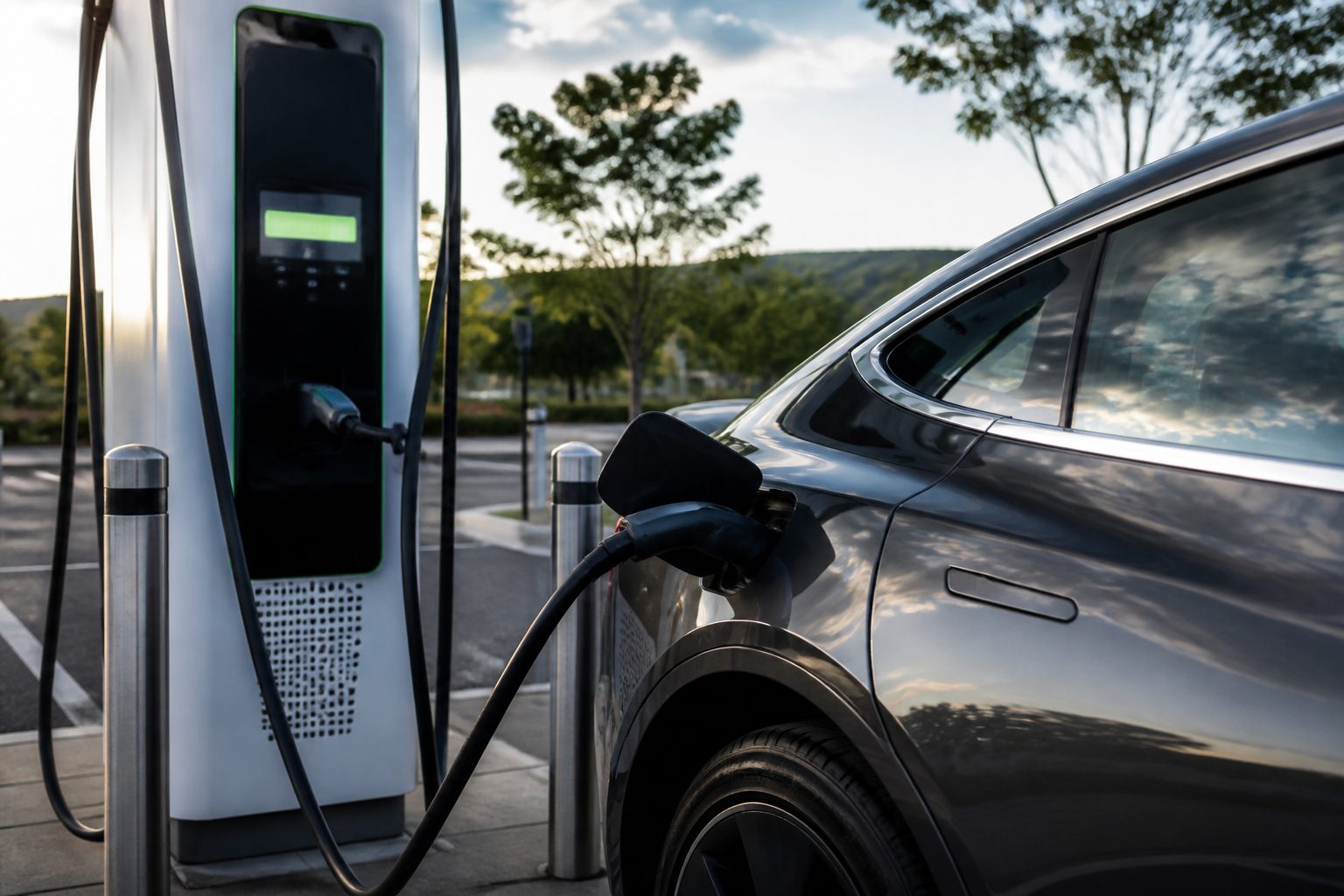
As electric vehicles (EVs) become increasingly mainstream, every facet of their ownership—including charging—is under the microscope, particularly by the insurance industry. While the convenience of rapid charging is undeniable, questions are emerging about whether the speed and frequency of charging could introduce different risk profiles that insurers might consider when calculating premiums. This article delves into the intricate relationship between EV charging speeds (Level 1, Level 2, and DC Fast Charging) and their potential influence on your auto insurance costs, exploring factors from electrical strain to fire risk and grid impact.
Understanding EV Charging Types and Their Characteristics
Before we explore the insurance implications, it's crucial to understand the fundamental differences between the primary EV charging types available to consumers. Each method delivers power at a different rate, impacting not just charging time but also the thermal and electrical stress on the vehicle's battery and related components.
Level 1 Charging: This is the slowest method, typically using a standard 120-volt (V) household outlet. It's often referred to as 'trickle charging' and adds about 2-5 miles of range per hour. While incredibly convenient for overnight charging at home, its slow pace means it imparts minimal stress on the battery or the electrical system. It's the most common charging method for new EV owners initially, as it requires no special equipment beyond what comes with the car.
Level 2 Charging: Operating on a 240V circuit, similar to an electric clothes dryer, Level 2 charging is significantly faster, providing 20-60 miles of range per hour. This is the most common home charging solution, often requiring a dedicated charging station (EVSE) installation. Public Level 2 chargers are also widespread. The higher power delivery means more heat generation in the battery and charging system compared to Level 1, but it's still generally considered well within the vehicle's design parameters for routine use.
DC Fast Charging (DCFC) / Level 3: This is the fastest charging method, bypassing the vehicle's onboard charger to deliver direct current (DC) power straight to the battery. DCFC stations operate at much higher voltages (400V to 800V+) and currents, capable of adding 100-300+ miles of range in 20-30 minutes. While incredibly efficient for long journeys, the rapid influx of power generates substantial heat and places the most significant stress on the battery pack. Advanced battery management systems (BMS) are crucial here to regulate temperature and prevent damage.
The Insurance Perspective: Assessing Charging-Related Risks
Insurers are fundamentally risk assessors. When it comes to EVs, they evaluate everything from the cost of battery replacement to the repair complexity of advanced driver-assistance systems (ADAS). Charging, as a critical and frequent activity, naturally falls under this scrutiny. The core question for underwriters is: Does a particular charging habit or technology introduce a higher probability of a claim, either directly through an incident during charging or indirectly through accelerated component wear?
The primary concerns for insurers related to charging speeds revolve around a few key areas:
- Electrical System Strain: Higher charging speeds mean higher electrical loads. While EVs and charging equipment are designed to handle these loads, sustained high-power charging could theoretically contribute to wear and tear on electrical components, potentially leading to premature failure or, in very rare cases, overheating.
- Battery Degradation: Rapid charging generates more heat, which is a known accelerant for battery degradation over time. A battery with significantly reduced capacity or health might be more prone to issues, or simply reach end-of-life faster, potentially necessitating costly replacement that could impact future claim valuations.
- Fire Risk: Although extremely rare, the perception of EV battery fires, particularly during or after charging, is a concern. While statistically less frequent than internal combustion engine (ICE) vehicle fires, when they do occur, they can be intense and challenging to extinguish, leading to high-value total loss claims. Insurers are keen to understand if certain charging practices elevate this risk.
- Grid Impact and Infrastructure: While less direct to individual premiums, the broader grid impact of widespread high-speed charging could influence general market rates. Overloaded local grids or faulty public charging infrastructure could lead to power surges or other issues that might affect vehicles.
- Charging Equipment Damage/Theft: While not directly tied to speed, the presence of more sophisticated and expensive home charging equipment (Level 2) or the use of public DCFC stations introduces potential for damage or theft of the equipment itself, or damage to the vehicle while connected.
It's important to note that the EV market is still evolving, and definitive, widespread premium differentiation based solely on charging speed is not yet a standard practice across all insurers. However, data collection and actuarial analysis are ongoing, and insights are beginning to emerge.
Level 1 Charging: Minimal Risk, Minimal Impact
Level 1 charging is generally considered the safest and least impactful method from an insurance perspective. It uses standard household outlets, which are already part of existing home electrical infrastructure and are designed for continuous use. The low power draw minimizes heat generation and electrical stress on both the vehicle's battery and the home's wiring.
From an underwriting standpoint, Level 1 charging presents:
- Lowest Electrical Strain: The minimal current means there's virtually no added risk of electrical overload or overheating compared to other household appliances.
- Negligible Battery Impact: The slow rate of charge allows the battery to charge gently, minimizing thermal stress and contributing least to long-term degradation.
- Reduced Infrastructure Risk: No special home installation is required, eliminating concerns about faulty wiring or non-certified equipment.
Currently, there is no evidence to suggest that insurers differentiate premiums based on a vehicle being primarily charged via Level 1. The risks associated with this method are so low that they are largely indistinguishable from the general baseline risks of vehicle ownership. It's a 'set it and forget it' approach that aligns well with existing risk models.
While safe, the practical limitation of Level 1 charging is its speed. For many EV owners, particularly those with longer commutes or larger battery packs, it simply doesn't provide enough range quickly enough. This pushes many towards Level 2 or DCFC, where the insurance considerations begin to subtly shift.
Level 2 Charging: Convenience vs. Potential Considerations
Level 2 charging strikes a balance between speed and accessibility, making it the most popular home charging solution. However, its higher power delivery introduces a few more considerations for insurers compared to Level 1.
Key points for insurers regarding Level 2 charging:
- Professional Installation: A dedicated 240V circuit and EVSE often require professional installation. Insurers may implicitly consider the quality of this installation. While not directly asking about your electrician, a reputable, licensed installation reduces the risk of electrical faults that could lead to property damage or vehicle damage claims.
- Increased Electrical Load: While still well within design limits, the continuous draw of 30-80 amps for several hours places a higher, sustained load on a home's electrical system than Level 1. Modern homes are typically equipped to handle this, but older wiring or DIY installations could theoretically pose a higher risk.
- Battery Thermal Management: Level 2 charging generates more heat within the battery than Level 1. While vehicle battery management systems are designed to mitigate this, frequent, high-power Level 2 charging in extreme climates could, over many years, contribute to slightly accelerated battery degradation compared to exclusively Level 1 charging.
As of now, direct premium adjustments based on Level 2 home charging are not widely implemented by insurers. However, some policies may require disclosure of significant home modifications, including the installation of a dedicated charging station. Furthermore, some insurers offer discounts for EV ownership, and the presence of a Level 2 home charger might be seen as a positive indicator of responsible EV ownership, potentially contributing to eligibility for such discounts.
The primary insurance concern with Level 2 is less about the charging itself and more about the surrounding infrastructure. For example, if a faulty Level 2 charger installation leads to a house fire, that would fall under homeowners insurance, but the damage to the EV would be an auto insurance claim. This interconnectedness means insurers are looking at the whole picture of EV ownership.
DC Fast Charging: Speed Benefits and Underwriting Nuances
DC Fast Charging is where the conversation about charging speed and insurance risk becomes most nuanced. The immense power delivery, while convenient, does place the highest demands on the EV's battery and electrical components.
Potential areas of interest for insurers regarding DCFC:
- Elevated Thermal Stress: DCFC generates significant heat within the battery pack. While sophisticated thermal management systems cool the battery, frequent exposure to high temperatures can, over the vehicle's lifespan, contribute to faster battery degradation. A battery with a compromised state of health might be more susceptible to issues or have a lower resale value, impacting total loss calculations.
- Component Strain: The rapid flow of high current and voltage can put more strain on the battery cells, power electronics, and cooling systems. While designed for this, the long-term effects of near-exclusive DCFC use are still being studied.
- Public Station Risks: DCFC is primarily done at public stations. These environments introduce different risks: potential for vandalism, damage from other vehicles, or even issues arising from faulty public charging equipment. While the station operator is usually liable for equipment failure, damage to the vehicle while connected would be an auto insurance claim.
- Increased Accident Exposure: While speculative, some argue that drivers who frequently rely on DCFC for long-distance travel might inherently have higher mileage and therefore a slightly increased risk of accidents compared to those who primarily use their EV for local commuting with home charging.
It's critical to emphasize that modern EVs are engineered to handle DC Fast Charging safely and efficiently. Manufacturers build in robust battery management systems precisely to prevent damage from rapid charging. However, the cumulative effect of frequent DCFC over many years, especially in conjunction with other factors like extreme climates, is an area of ongoing research for both automakers and insurers.
Currently, very few, if any, insurers explicitly ask about a driver's DCFC habits or adjust premiums based solely on this. However, as telematics data becomes more sophisticated and widespread, it's conceivable that insurers could gain insights into charging patterns. If actuarial data eventually reveals a statistically significant correlation between heavy DCFC use and increased claims (e.g., related to battery issues), then premium differentiation could become a future consideration. For now, the impact is largely indirect and absorbed into general EV risk assessments.
Battery Health, Degradation, and Insurance Claims
The health and longevity of an EV's battery are central to its overall value and, consequently, to insurance considerations. Battery degradation is a natural process, but certain factors, including frequent high-speed charging, can accelerate it. A battery that has significantly degraded may impact insurance claims in several ways:
- Total Loss Valuation: In the event of a total loss, the vehicle's actual cash value (ACV) is determined. A battery with significantly reduced capacity or health would theoretically lower the ACV, impacting the payout.
- Repair vs. Replace Decisions: For damage that affects the battery, the cost of repair or replacement is a major factor. If a battery is already degraded, an insurer might be more inclined to declare a total loss rather than invest in a partial repair or replacement of an already compromised component.
- Future Claim Frequency (Speculative): While not yet proven, some in the industry speculate that severely degraded batteries might be more prone to other issues, although this is largely managed by sophisticated BMS.
Many EV manufacturers offer substantial warranties on their battery packs, often 8 years or 100,000 miles, guaranteeing a certain percentage of original capacity (e.g., 70%). This warranty provides a buffer for owners and insurers against premature degradation. However, beyond the warranty period, the responsibility falls more squarely on the owner and their insurance.
The consensus among battery experts is that while frequent DCFC can contribute to slightly faster degradation compared to slower charging, the effect is often minor for modern batteries and is usually overshadowed by other factors like overall mileage, ambient temperature, and charging to 100% frequently. Most drivers mix their charging habits, using DCFC for road trips and Level 2 or 1 for daily charging, which helps mitigate the impact.
Insurers are keenly watching developments in battery technology, including advancements in battery health monitoring and repair. As battery diagnostics become more standardized, it's possible that data on a vehicle's battery health could become a factor in underwriting, though this is still several years away from widespread implementation.
The Future: Charging Data, Telematics, and Premium Adjustments
The intersection of EV technology, charging infrastructure, and insurance is rapidly evolving. The most significant potential for charging speed to influence premiums lies in the advancement and adoption of telematics and connected car data.
Consider these future scenarios:
- Granular Data Collection: Modern EVs are essentially computers on wheels, collecting vast amounts of data, including charging habits (type of charger, frequency, duration, state of charge). As more drivers opt into telematics programs (often for discounts), insurers could gain access to this anonymized, aggregated data.
- Actuarial Modeling: With sufficient data, actuaries could potentially identify correlations between specific charging patterns (e.g., exclusive, daily DCFC to 100% in extreme heat) and actual claims data (e.g., higher incidence of battery-related claims or faster degradation leading to lower ACV at total loss).
- Personalized Premiums: If strong correlations emerge, insurers might begin to offer more personalized premiums. For example, a driver who primarily uses Level 1 or Level 2 charging might receive a slight discount, while a driver with a documented pattern of highly aggressive, frequent DCFC might see a marginal increase. This would likely be part of a broader telematics-based assessment, not just an isolated factor.
- Incentivized Best Practices: Insurers could also use this data to incentivize 'best practices' for battery health, such as encouraging charging to 80% for daily use or promoting a mix of charging speeds.
However, several hurdles remain before this becomes a reality. Data privacy concerns are paramount, and consumers must consent to sharing such detailed information. Furthermore, the statistical significance of charging speed alone, independent of other factors like mileage, driving style, and geographic location, needs to be robustly established through extensive data analysis.
For now, the impact of EV charging speed on insurance premiums is largely indirect. Insurers are more focused on the higher repair costs of EVs, the cost of battery replacement in accidents, and the general market value of these sophisticated vehicles. While the industry is certainly monitoring charging trends, widespread, explicit premium differentiation based on your charging speed is not a current reality. As always, the best advice is to maintain good driving habits, keep your vehicle in good condition, and compare quotes from multiple carriers to find the best rate for your specific EV and usage patterns.
The pace of innovation in both EVs and insurance means this landscape will continue to evolve. Staying informed about your vehicle's charging recommendations and understanding how insurers assess risk will be key for EV owners in the years to come. Ultimately, the goal for both drivers and insurers is to ensure the safe, efficient, and cost-effective operation of electric vehicles on our roads.
Key takeaways
- Most insurers do not currently adjust premiums based on specific EV charging speeds (Level 1, Level 2, DCFC).
- Insurers are primarily concerned with the overall high repair costs of EVs and potential battery replacement expenses in accidents.
- Level 1 and Level 2 charging generally pose minimal to no increased risk from an insurance perspective, especially with professional installation.
- Frequent DC Fast Charging, while safe for modern EVs, could theoretically contribute to faster battery degradation over many years, an area insurers are monitoring.
- The future of telematics and data analytics might lead to more personalized premiums based on charging habits, but this is not yet widespread.
Frequently asked questions
Q.Do insurers currently charge more for EVs based on their charging speed?
Currently, most insurers do not explicitly differentiate premiums based on the specific charging speed (Level 1, Level 2, or DC Fast Charging) an EV owner primarily uses. Their focus remains on broader EV risk factors like repair costs and battery replacement in collisions.
Q.Could using DC Fast Charging frequently increase my insurance premiums in the future?
While not a current practice, it's conceivable that in the future, as telematics data becomes more prevalent, insurers might analyze charging patterns. If extensive data reveals a statistically significant correlation between frequent DC Fast Charging and higher claim frequencies (e.g., due to accelerated battery degradation), it could potentially influence personalized premiums.
Q.Does installing a Level 2 home charger affect my auto insurance?
Installing a Level 2 home charger typically does not directly increase your auto insurance premium. However, a professional, licensed installation is crucial to prevent electrical issues that could lead to property damage, which would involve your homeowners insurance, and potentially damage to your EV, triggering an auto claim.
Q.Is there a fire risk associated with EV charging that insurers are concerned about?
While extremely rare, EV battery fires, especially during or after charging, are a concern for insurers due to their intensity and high claim costs. However, modern EVs and charging equipment have robust safety features, and statistically, EV fires are less frequent than internal combustion engine vehicle fires.
Q.Will my EV's battery health impact my insurance value?
Yes, your EV's battery health can indirectly impact its actual cash value (ACV) in the event of a total loss. A significantly degraded battery, especially outside of warranty, could lower the vehicle's valuation, affecting the insurance payout.
References
Licensed P&C insurance analyst with 12+ years comparing auto and EV rates across US carriers.
Continue reading
Decoding EV Insurance for Drivers with Home Energy Storage Systems: Discounts & Coverage Implications
This piece explores how integrating a home energy storage system (like a Powerwall) interacts with EV insurance premiums, examining potential discounts for grid independence, reduced charging costs, and specific coverage for the battery system itself and related infrastructure. It will also touch on liability implications. Use this checklist to compare premiums, deductibles, repair support, and policy wording before renewal.
EV Insurance for Drivers with High-Risk Occupations: Premiums & Coverage
This article will explore how certain high-risk occupations, such as first responders, pilots, or professionals with extensive travel, can impact EV insurance premiums and coverage options. It will offer strategies for these drivers to mitigate higher costs and ensure their electric vehicles are adequately protected, considering usage patterns and perceived risk factors. Use this checklist to compare premiums, deductibles, repair support, and policy wording before renewal.
Decoding EV Insurance for Drivers with High-Risk Occupations: Premiums & Coverage
This article explores how certain professions (e.g., real estate agents, delivery drivers using personal EVs, or those with extensive daily commutes) can influence EV insurance premiums, providing strategies for mitigating costs and ensuring adequate coverage for business-related use not covered by standard policies. It will delve into specific underwriting considerations for occupational risk. Use this checklist to compare premiums, deductibles, repair support, and policy wording before renewal.