
Unpacking Lucid Gravity Insurance Costs: A 2026 Outlook for Luxury Electric SUVs
The Lucid Gravity, a highly anticipated luxury electric SUV, is set to redefine its segment. But what will it cost to insure this cutting-edge vehicle in 2026?

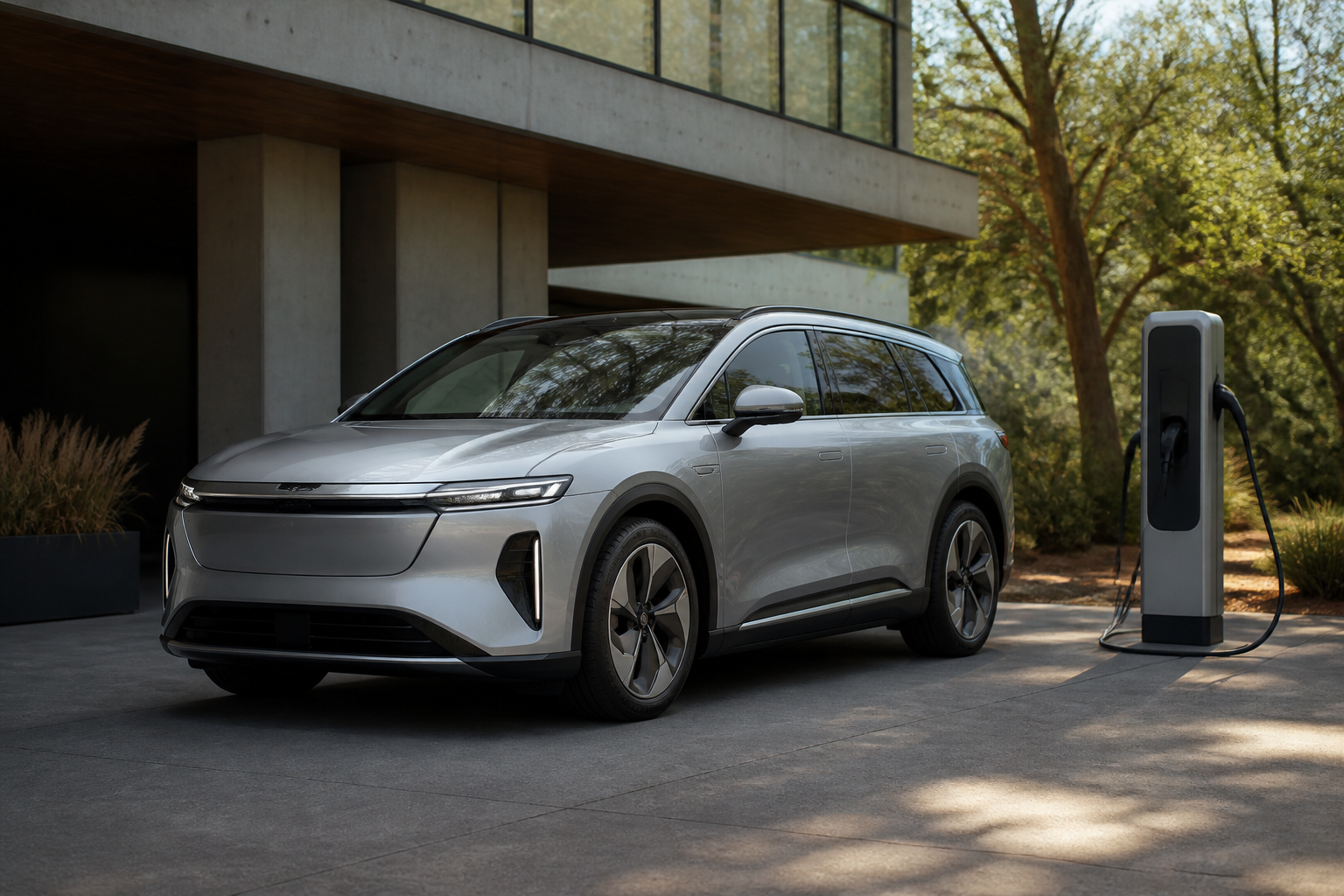
As the automotive world eagerly awaits the 2026 arrival of the Lucid Gravity, a luxury electric SUV poised to combine opulent design with groundbreaking performance, prospective owners are rightly turning their attention to the practicalities of ownership – specifically, the projected insurance costs. Insuring a vehicle of this caliber, especially one at the forefront of electric vehicle (EV) technology, presents a unique set of considerations that differ from traditional internal combustion engine (ICE) vehicles and even many existing EVs. As a Senior Auto Insurance Analyst at EV Insurance Hub, I've delved into the anticipated factors that will shape Lucid Gravity insurance premiums in 2026, offering a forward-looking analysis for those considering this impressive addition to the luxury EV market.
Introduction: The Lucid Gravity and Its Insurance Implications
The Lucid Gravity is not just another SUV; it represents Lucid Motors' ambitious expansion into the high-end electric SUV segment, following the success of its Air sedan. With its anticipated long range, rapid charging capabilities, and a focus on luxury and advanced technology, the Gravity is set to compete directly with established luxury players. However, this innovation often comes with a higher price tag for insurance, a trend we've observed across the premium EV spectrum.
Understanding the nuances of insuring a vehicle like the Lucid Gravity requires looking beyond standard metrics. Factors such as its sophisticated powertrain, advanced driver-assistance systems (ADAS), and the use of specialized materials will significantly influence how insurers assess risk and, consequently, set premiums. Our analysis aims to demystify these elements, providing a clear picture of what future Lucid Gravity owners can expect in terms of insurance expenditure in 2026.
Key Factors Driving Lucid Gravity Insurance Costs
When evaluating the insurance cost for any vehicle, particularly a high-value, technologically advanced EV like the Lucid Gravity, insurers consider a multitude of factors. These typically fall into two broad categories: vehicle-specific attributes and driver-specific attributes. For the Lucid Gravity, its inherent design and technology will play a disproportionately large role.
Expected average annual insurance premiums for luxury EVs in 2026 could range from $3,500 to $6,500+, depending heavily on the specific model, driver profile, and geographic location. The Lucid Gravity, given its projected price point and advanced features, is likely to fall into the higher end of this spectrum, potentially exceeding it for certain drivers or regions. This range is an estimate based on current luxury EV trends and anticipated technological advancements.
Here are some of the primary vehicle-specific factors that will influence the Lucid Gravity's insurance premiums:
- MSRP and Replacement Cost: Higher vehicle value directly correlates with higher insurance costs. The Gravity's luxury positioning means a substantial sticker price, increasing the payout for total loss claims.
- Performance Capabilities: Powerful electric motors and rapid acceleration, while exhilarating, can be perceived as higher risk by insurers due to increased potential for high-speed accidents.
- Repair Complexity and Parts Cost: Advanced materials, integrated technology, and specialized EV components often lead to more complex and expensive repairs.
- Safety Features and ADAS: While designed to prevent accidents, these systems can be costly to repair or recalibrate after even minor incidents.
- Theft Risk: Luxury vehicles, particularly those with high demand, can be targets for theft, influencing comprehensive coverage costs.
- Battery Design and Placement: The large, integrated battery pack is a critical component, and its repair or replacement after a collision can be exceptionally expensive, impacting collision and comprehensive premiums.
Advanced Materials and Repairability Challenges
Luxury EVs, including the Lucid Gravity, often utilize lightweight yet strong materials like aluminum alloys, carbon fiber composites, and high-strength steel to enhance performance, efficiency, and safety. While beneficial for the vehicle's integrity, these materials present significant challenges for collision repair. Specialized tools, techniques, and certified technicians are required, driving up labor costs and repair times.
Furthermore, Lucid's commitment to bespoke design means that many body panels and structural components may be proprietary and not easily sourced from third-party manufacturers. This exclusivity can lead to longer wait times for parts and higher costs, directly impacting the 'damageability' and 'repairability' scores that insurers use to calculate premiums. A minor fender bender could easily escalate into a significant claim due to the complexity of repairing or replacing these advanced components.
Insurers meticulously track these repair costs through organizations like the Highway Loss Data Institute (HLDI). Vehicles that consistently show higher repair costs, longer repair times, or a greater propensity for total loss after an accident will invariably face higher premiums for collision and comprehensive coverage. For the Lucid Gravity, these factors will be under close scrutiny as it enters the market.
Performance, Power, and Potential for Claims
Lucid Motors is renowned for pushing the boundaries of EV performance, and the Gravity is expected to continue this tradition. With potentially blistering acceleration and high top speeds, the Gravity will be a formidable machine on the road. While thrilling for drivers, high-performance vehicles are often associated with a higher risk of severe accidents.
Insurers analyze statistics related to vehicle power and accident frequency. Cars with higher horsepower and quicker acceleration times often see higher claim frequencies and severities. This isn't to say that all Gravity owners will drive recklessly, but the vehicle's capability itself is a risk factor. The sheer kinetic energy involved in a collision with a heavy, high-speed EV can result in more extensive damage to both the Lucid Gravity and other vehicles involved, leading to larger claim payouts.
For example, a high-performance EV might have a 10-20% higher premium for liability and collision coverage compared to a standard SUV of similar size but lower performance, even before considering other EV-specific factors. This 'performance surcharge' is a common element in the insurance landscape for powerful vehicles, regardless of their propulsion type.
Technology, ADAS, and Autonomy's Role
The Lucid Gravity will undoubtedly be packed with state-of-the-art technology, including advanced driver-assistance systems (ADAS) like adaptive cruise control, lane-keeping assist, automatic emergency braking, and potentially more advanced semi-autonomous driving features. These systems are designed to enhance safety and prevent accidents, which theoretically should lower insurance costs.
However, the reality is more complex. The sensors (radar, lidar, cameras, ultrasonic) and computing power required for these systems are highly sophisticated and often integrated into vulnerable areas of the vehicle, such as bumpers, grilles, and windshields. Even a minor bump can necessitate the replacement and precise recalibration of multiple sensors, a process that requires specialized equipment and expertise. A new windshield, for instance, might cost $500-$1,000 on a standard car, but $1,500-$3,000+ on an EV with integrated ADAS cameras due to recalibration requirements.
The cost of repairing or replacing these ADAS components can quickly outweigh the theoretical savings from accident prevention. Insurers are still grappling with how to accurately price the risk and repair costs associated with increasingly complex ADAS and emerging autonomous driving capabilities. For a vehicle at the technological forefront like the Gravity, this will be a significant underwriting consideration.
Battery Technology and Replacement Costs
The battery pack is the single most expensive component in an EV, often accounting for 30-50% of the vehicle's total cost. The Lucid Gravity is expected to feature a large, advanced battery pack to deliver its impressive range. While battery technology is becoming more robust, severe collisions can still damage these packs, sometimes beyond repair.
Replacing a large EV battery can cost anywhere from $15,000 to $30,000 or more, depending on the manufacturer and battery chemistry. This high cost significantly impacts collision and comprehensive coverage premiums, as insurers must factor in the potential for such a substantial payout. Even if the battery isn't directly damaged, the structural components surrounding it might be, requiring extensive labor to access and repair.
In some cases, a damaged battery pack can lead to a vehicle being declared a total loss, even if other damage appears minor, simply because the cost of battery replacement exceeds a certain percentage of the vehicle's value. This higher threshold for total loss declarations also contributes to increased insurance premiums for high-value EVs like the Lucid Gravity.
- Battery Integration: Lucid's 'skateboard' platform integrates the battery as a structural component, making repair or replacement complex.
- Thermal Management: Sophisticated cooling systems for the battery add to repair complexity and cost.
- Specialized Handling: Damaged high-voltage batteries require specialized handling and disposal, adding to post-accident expenses.
Mitigating Lucid Gravity Insurance Expenses
While the inherent characteristics of the Lucid Gravity will likely lead to higher insurance premiums, prospective owners are not without options to manage these costs. A proactive approach to insurance shopping and risk management can yield significant savings.
Here are strategies to consider for mitigating your Lucid Gravity insurance expenses in 2026:
- Shop Around Extensively: Do not settle for the first quote. Insurance carriers have different underwriting models and risk appetites for new, high-tech EVs. Compare quotes from at least 5-7 different insurers, including both national providers and specialized EV insurers.
- Maintain a Clean Driving Record: This is paramount. A history of accidents or traffic violations will significantly increase premiums, especially for a high-performance vehicle.
- Increase Your Deductibles: Opting for higher deductibles (e.g., $1,000 or $2,500) on collision and comprehensive coverage can substantially lower your annual premium. Just ensure you have the funds readily available to cover these out-of-pocket costs if a claim arises.
- Bundle Policies: Combining your auto insurance with homeowners or renters insurance from the same carrier often results in a multi-policy discount, typically ranging from 5% to 20%.
- Inquire About EV-Specific Discounts: Some insurers offer discounts for EVs, particularly for charging at home, or for vehicles with certain safety features. Ask specifically about discounts for advanced safety features, anti-theft devices, and clean energy vehicles.
- Consider Telematics/Usage-Based Insurance: If you are a safe driver and comfortable with your driving habits being monitored, telematics programs can offer discounts based on your actual driving behavior.
- Install a Secure Home Charging Setup: While not a direct insurance discount, a properly installed and certified Level 2 or DC fast charger at home can reduce reliance on public charging, which some insurers might view favorably for risk.
- Review Coverage Annually: Your insurance needs and the market can change. Re-evaluate your policy and shop for new quotes every year to ensure you're getting the best rates and appropriate coverage.
It is crucial to remember that while the Lucid Gravity promises an exceptional driving experience, its advanced nature will translate into a premium insurance cost. By understanding the underlying factors and employing smart mitigation strategies, prospective owners can better prepare for the financial realities of insuring this luxury electric SUV.
Key takeaways
- Lucid Gravity insurance costs in 2026 are projected to be on the higher end of the luxury EV spectrum, likely ranging from <strong>$3,500 to $6,500+ annually</strong>, influenced by its high MSRP and advanced technology.
- Advanced materials and complex integrated technology mean higher repair costs and longer repair times, directly impacting collision and comprehensive premiums.
- The Gravity's high-performance capabilities contribute to increased perceived risk by insurers, potentially leading to higher liability and collision coverage expenses.
- Expensive battery replacement costs (<strong>$15,000-$30,000+</strong>) are a significant factor, making comprehensive and collision coverage crucial for prospective owners.
- Mitigation strategies include shopping around extensively, maintaining a clean driving record, opting for higher deductibles, and bundling policies to secure potential discounts.
Frequently asked questions
Q.Will Lucid Gravity insurance be more expensive than a comparable luxury ICE SUV?
Generally, yes. While luxury ICE SUVs also command high premiums, the Lucid Gravity's advanced EV technology, expensive battery pack, and specialized repair requirements are likely to result in higher insurance costs for collision and comprehensive coverage. The overall cost will depend on specific models and individual driver profiles.
Q.What kind of coverage should I prioritize for a Lucid Gravity?
For a high-value EV like the Lucid Gravity, robust collision and comprehensive coverage are crucial due to high repair and replacement costs for the vehicle itself, especially the battery. Additionally, consider high liability limits to protect your assets in case you cause an accident, and potentially gap insurance if financing or leasing.
Q.Can ADAS features reduce my Lucid Gravity insurance premiums?
While ADAS (Advanced Driver-Assistance Systems) are designed to prevent accidents, their impact on premiums is mixed. They can reduce accident frequency, but the high cost of repairing or recalibrating these complex sensors after even minor incidents can offset potential savings, sometimes leading to higher repair-related premiums.
Q.How much could a Lucid Gravity battery replacement cost, and how does it affect insurance?
A Lucid Gravity battery replacement could cost anywhere from $15,000 to $30,000 or more, depending on the specific pack and labor. This high cost significantly impacts collision and comprehensive insurance premiums, as insurers must account for the potential of such a large payout, which can also lead to a vehicle being declared a total loss more readily.
Q.Are there specific insurers that specialize in luxury EV coverage for vehicles like the Lucid Gravity?
While many major carriers offer EV insurance, some specialized insurers or high-net-worth divisions of larger companies may have more experience or tailored policies for luxury EVs. It's recommended to compare quotes from a wide range of insurers, including those known for high-value vehicle coverage, as their underwriting models for advanced EVs can vary significantly.
References
Automotive journalist with 10+ years road-testing EVs and tracking model-by-model ownership costs.
Continue reading
Decoding EV Insurance for Ford F-150 Lightning vs. Ram 1500 REV: A 2026 Cost Analysis
With the Ram 1500 REV entering the market to compete directly with the Ford F-150 Lightning, this article will provide a direct, data-driven comparison of projected insurance costs for these two highly anticipated electric pickup trucks. We'll analyze how factors like battery size, repair complexity, and ADAS features might differentiate premiums, offering guidance for prospective buyers. Use this checklist to compare premiums, deductibles, repair support, and policy wording before renewal.
Decoding EV Insurance Costs: The Volkswagen ID.7 vs. Hyundai Ioniq 6 for US Drivers
This article provides a direct comparison of projected insurance premiums for two popular mid-size electric sedans in the US market, the VW ID.7 and Hyundai Ioniq 6. We'll analyze factors specific to each model, such as repairability, parts availability, and ADAS features, to explain potential cost differences for prospective buyers. Use this checklist to compare premiums, deductibles, repair support, and policy wording before renewal.
Decoding EV Insurance for Emerging Asian Brands: BYD Seal, Nio ET5 & Xpeng P7 Costs in the UK
With the increasing presence of Chinese EV brands in the UK market, this article analyzes projected insurance costs for popular models like the BYD Seal, Nio ET5, and Xpeng P7, providing crucial insights for prospective buyers navigating new entrants. Use this checklist to compare premiums, deductibles, repair support, and policy wording before renewal.