
Nio, Xpeng, and BYD EV Insurance Costs: A Deep Dive for Global Drivers
As Chinese electric vehicles like Nio, Xpeng, and BYD gain traction globally, understanding their insurance costs is crucial for prospective owners. This analysis delves into the unique factors shaping premiums for these innovative brands.

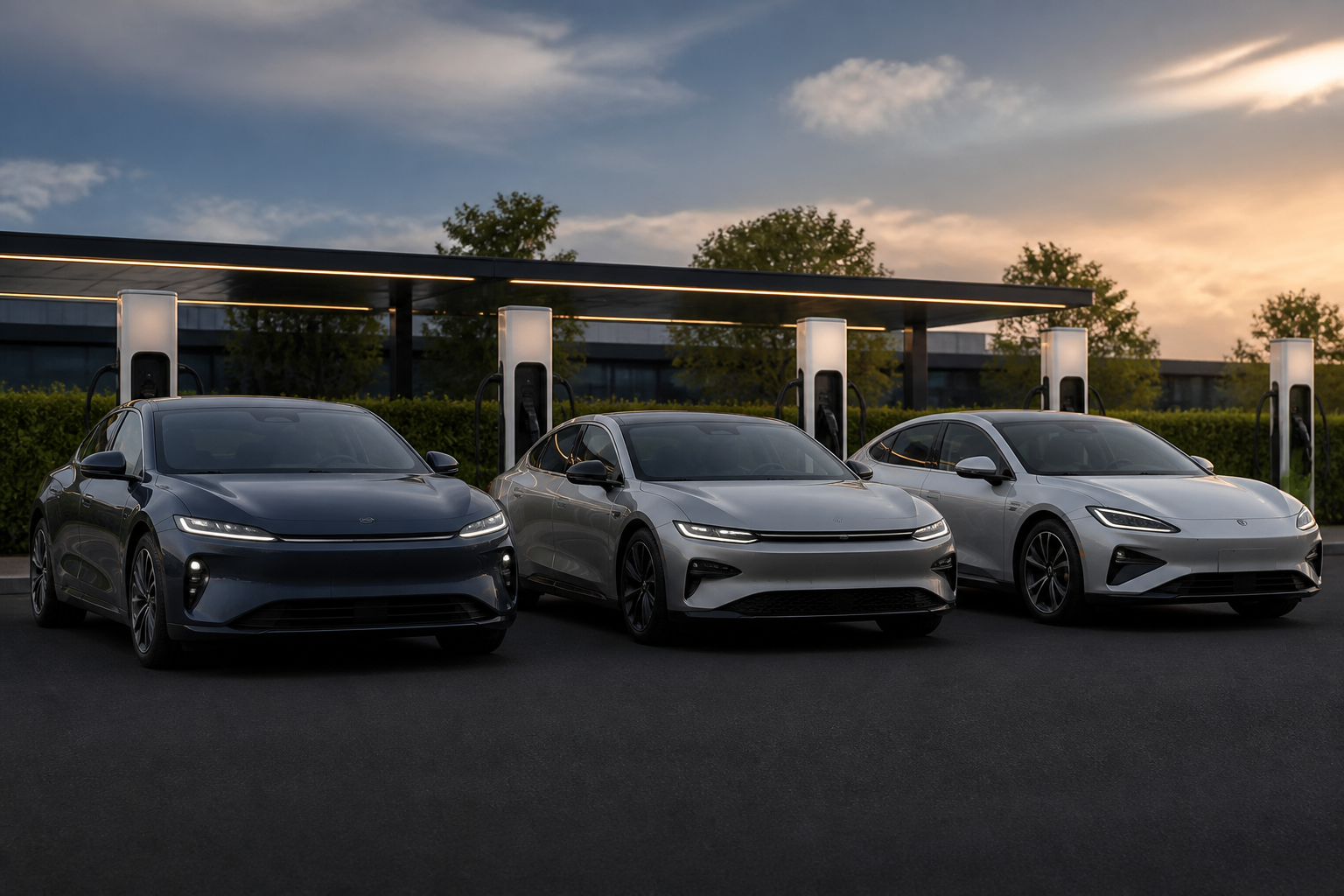
The rapid ascent of Chinese electric vehicle (EV) manufacturers like Nio, Xpeng, and BYD into global markets presents an exciting new chapter for automotive consumers. These brands are increasingly recognized for their innovative technology, competitive pricing, and ambitious expansion plans. However, for prospective owners, a critical consideration often overlooked is the cost of insurance. While the sticker price might be attractive, the long-term running costs, including insurance premiums, can significantly impact overall affordability. This article will dissect the unique insurance considerations and cost trends for Nio, Xpeng, and BYD models, comparing them to established Western marques and exploring the underlying factors that influence these premiums.
Chinese EVs in the Global Insurance Landscape
The entry of Nio, Xpeng, and BYD into markets beyond China, including parts of Europe and Southeast Asia, and with future aspirations for North America, marks a significant shift in the automotive industry. These vehicles are not just new; they often bring novel battery technologies, advanced driver-assistance systems (ADAS), and unique service models. From an insurance perspective, this novelty can translate into uncertainty, which insurers typically price into premiums. Insurers rely heavily on historical data for risk assessment, and with newer brands and models, this data is often limited or non-existent in new markets.
Early adopters of these brands might find that insurance costs are initially higher than for comparable, more established EVs. This isn't necessarily a reflection of the vehicle's inherent risk, but rather the insurer's need to cover potential unknown risks, such as the cost and availability of specialized parts, the expertise required for repairs, and the lack of extensive claims history. As these brands establish a stronger presence and more data becomes available, we anticipate a gradual normalization of premiums, assuming their claims experience aligns with or improves upon established benchmarks.
Key Factors Influencing Nio, Xpeng, and BYD Premiums
Several universal factors influence EV insurance premiums, but some take on amplified importance for emerging brands like Nio, Xpeng, and BYD. Understanding these can help consumers anticipate and potentially mitigate higher costs. These factors include:
- Vehicle Value: Higher purchase prices generally lead to higher comprehensive and collision premiums, as the cost to repair or replace the vehicle is greater. Many Nio and Xpeng models compete in the premium segment, which can elevate this factor.
- Performance Specifications: High-performance EVs, regardless of brand, tend to have higher premiums due to increased accident risk. Many models from these brands offer impressive acceleration and power.
- Safety Features and Ratings: Advanced safety tech can reduce premiums, but only if widely recognized and proven effective by safety organizations. New brands may take time to achieve these ratings in global markets.
- Repair Costs and Parts Availability: This is arguably the most significant factor for new market entrants. The ease and cost of sourcing replacement parts, especially specialized EV components like battery packs, can dramatically affect premiums.
- Service Network Density: A sparse or nascent service network can increase the time and cost of repairs, making insurers wary.
- Technology Complexity: The sophistication of their ADAS, infotainment systems, and unique features like Nio's battery swap technology can introduce new repair complexities.
It's important to note that while these factors are generally applicable, their weight can vary significantly based on the specific market (e.g., Norway vs. Germany for Nio) and the individual insurer's underwriting practices.
Parts Availability and Repair Complexity
One of the most critical determinants of insurance costs for any vehicle, and particularly for new market entrants like Nio, Xpeng, and BYD, is the availability and cost of replacement parts. When a vehicle is involved in a collision, the ease with which its components can be sourced and installed directly impacts the repair timeline and expense. For brands primarily manufactured in China and expanding into new territories, establishing a robust global supply chain for spare parts can be a significant undertaking.
In the initial phases of market entry, insurers often face uncertainties regarding:
- Lead Times for Parts: If a specific component needs to be shipped from China, the delay can increase rental car costs, which are often covered by insurance.
- Cost of OEM Parts: Without a competitive aftermarket, original equipment manufacturer (OEM) parts can be expensive.
- Specialized Repair Skills: EV technology, especially for advanced battery systems and integrated electronics, requires highly trained technicians. The availability of such expertise outside of dedicated brand service centers might be limited.
For example, a Nio's battery swap mechanism, while innovative, could present unique repair considerations if damaged. Similarly, Xpeng's advanced lidar sensors and BYD's Blade Battery technology, while offering safety and performance benefits, might require specialized diagnostic tools and repair procedures. Insurers factor these potential complexities and costs into their premium calculations. A lack of readily available parts or a limited network of approved repair shops can lead to higher comprehensive and collision premiums, potentially increasing costs by 10% to 25% compared to a vehicle with an established parts network, especially in the early years of market penetration.
Advanced Technology and Safety Features
Nio, Xpeng, and BYD are at the forefront of EV innovation, equipping their vehicles with cutting-edge technology, including sophisticated Advanced Driver-Assistance Systems (ADAS), advanced infotainment, and unique battery architectures. While these features are designed to enhance safety and driving experience, they can have a dual impact on insurance premiums.
On one hand, robust ADAS features like automatic emergency braking, lane-keeping assist, and adaptive cruise control can demonstrably reduce the likelihood of certain types of accidents. Insurers often offer discounts for vehicles equipped with these proven safety technologies. However, the complexity of these systems also means that if they are damaged in an accident, their repair or recalibration can be significantly more expensive than traditional vehicle components. For instance, replacing a damaged lidar unit on an Xpeng P7 or recalibrating the complex sensor suite on a Nio ET7 could incur substantial costs, influencing comprehensive coverage premiums.
Furthermore, the novelty of some of these technologies means that insurers may not yet have sufficient actuarial data to fully assess their long-term impact on claims frequency and severity. This uncertainty can lead to higher initial premiums. As these technologies mature and their real-world safety benefits are statistically proven across larger fleets, insurers are likely to adjust their pricing models accordingly. Until then, the advanced tech, while a selling point, can be a premium driver. For instance, a vehicle with a high number of complex sensors could see its comprehensive premium component increase by 5% to 15% due to potential repair costs.
Service Network and Insurer Familiarity
The density and maturity of a brand's service network play a pivotal role in insurance underwriting. For Nio, Xpeng, and BYD, which are relatively new to many international markets, their service infrastructure is still developing. A sparse service network can lead to:
- Longer Repair Times: Fewer service centers mean longer queues and potentially extended repair durations, increasing the cost of courtesy cars or loss of use claims.
- Higher Towing Costs: If the nearest authorized repair facility is far away, towing expenses can escalate.
- Limited Repair Options: Insurers prefer to have multiple approved repair shops to ensure competitive pricing and quality. A limited network restricts these options.
Equally important is insurer familiarity. Major insurance companies have vast databases of claims history for established brands. They understand common failure points, typical repair costs, and the overall risk profile. For Nio, Xpeng, and BYD, this historical data is limited in new markets. Insurers are in the business of risk assessment, and a lack of data equates to higher perceived risk. This 'newness penalty' often results in higher premiums until sufficient claims data is accumulated to allow for more precise risk modeling.
The process of building insurer confidence is gradual. It involves:
- Consistent Safety Performance: Demonstrating low accident rates.
- Efficient Claims Handling: Smooth and transparent repair processes.
- Robust Parts Supply Chain: Reliable availability of components.
- Trained Technicians: A growing pool of certified repair professionals.
Until these elements are firmly established, drivers of Nio, Xpeng, and BYD vehicles in newer markets might experience premiums that are 15% to 30% higher than for a comparable, well-established EV, all other factors being equal. This gap tends to narrow over time as the brand gains market share and claims data matures.
Comparing to Established EV Brands
When comparing insurance costs for Nio, Xpeng, and BYD against established EV players like Tesla, Volkswagen, or Hyundai, several nuances emerge. While all EVs generally face higher insurance costs than their internal combustion engine (ICE) counterparts due to battery replacement costs and specialized repairs, the 'new brand' factor adds another layer for Chinese manufacturers.
For instance, a Tesla Model 3, despite its high performance and advanced technology, benefits from a vast amount of claims data, a relatively established service network in major markets, and a growing ecosystem of independent repair shops. This familiarity allows insurers to price its risk more accurately. Conversely, a Nio ET5, while offering similar performance and luxury, might incur higher premiums in a market where Nio's service footprint is still nascent, and insurers have limited data on its repairability and claims frequency.
BYD, with its vertically integrated manufacturing and proprietary Blade Battery technology, has a strong reputation for reliability and cost-effectiveness in certain markets. However, its global expansion is still relatively recent for passenger vehicles. While BYD's focus on affordability in some models might suggest lower premiums, the repair complexity of its unique battery and electronics could counteract this. Xpeng, with its emphasis on advanced ADAS and intelligent features, faces similar challenges to Nio regarding parts and specialized repair.
General Comparison Trends (Illustrative, not exact figures):
- Nio vs. Premium Western EV (e.g., Porsche Taycan, Audi e-tron GT): Nio's luxurious and tech-heavy models might see premiums comparable to or slightly higher than these established brands in new markets, reflecting similar high vehicle values and advanced tech, but with an added 'new brand' premium due to service and parts.
- Xpeng vs. Mid-Range Western EV (e.g., Tesla Model 3/Y, Hyundai Ioniq 5): Xpeng's performance and tech focus could place its premiums in the higher end of this segment, especially where repair networks are less developed than for Tesla or Hyundai.
- BYD vs. Mass-Market Western EV (e.g., VW ID.4, MG ZS EV): BYD models, particularly the Atto 3 or Dolphin, might aim for more competitive premiums, but the unique battery tech and parts availability could still lead to slightly elevated costs compared to widely available models like the ID.4 in its early market stages.
It's crucial for consumers to obtain specific quotes for the exact model and their location, as these comparisons are broad generalizations. Insurify's data, for example, often shows that newer models or brands can have a wider variance in quotes between insurers, reflecting differing levels of confidence and data availability among carriers.
Strategies for Managing Your EV Insurance Costs
While some factors influencing Nio, Xpeng, and BYD insurance premiums are beyond an individual's control, prospective and current owners can employ several strategies to help manage and potentially reduce their costs:
- Shop Around Extensively: This is the single most effective strategy. Do not settle for the first quote. Insurers have varying risk appetites and data sets for newer brands. What one insurer considers high-risk, another might price more competitively. Utilize online comparison tools and independent brokers to get multiple quotes.
- Inquire About EV-Specific Discounts: Some insurers offer specific discounts for EVs, including those for charging infrastructure, green driving, or advanced safety features. Even if the brand is new, the technology itself might qualify for a discount.
- Maintain a Clean Driving Record: This is fundamental for all vehicle insurance. A spotless driving history is the most powerful tool for securing lower premiums.
- Consider Higher Deductibles: Increasing your comprehensive and collision deductibles can significantly lower your premium. However, ensure you have sufficient savings to cover the deductible if you need to make a claim.
- Bundle Policies: Combining your auto insurance with home or renters insurance from the same provider often results in multi-policy discounts.
- Install Telematics Devices (if offered): Some insurers offer usage-based insurance programs where a device monitors your driving habits. Safe drivers can earn discounts, which can be particularly beneficial if the base premium is higher.
- Ask About OEM-Specific Programs: As Nio, Xpeng, and BYD expand, they may partner with specific insurers or offer their own insurance programs, similar to Tesla Insurance. These programs might be tailored to their vehicles' unique needs and could offer competitive rates.
- Research Repair Networks: Before purchasing, investigate the availability of certified repair centers for the specific brand and model in your area. A robust local network might give insurers more confidence.
By proactively addressing these areas, drivers of Nio, Xpeng, and BYD vehicles can better navigate the evolving insurance landscape and work towards more favorable premium rates as these innovative brands continue to establish their presence globally.
Key takeaways
- Nio, Xpeng, and BYD EVs may initially have higher insurance premiums in new markets due to limited data and infrastructure.
- Parts availability and repair complexity, especially for unique EV components, significantly influence comprehensive and collision costs.
- Advanced technology and ADAS, while enhancing safety, can lead to higher repair costs if damaged, impacting premiums.
- The developing service networks and insurer unfamiliarity with these brands contribute to higher initial perceived risk.
- Drivers can mitigate costs by shopping around, leveraging discounts, maintaining a clean record, and considering higher deductibles.
Frequently asked questions
Q.Are Nio, Xpeng, and BYD EVs more expensive to insure than established brands?
Initially, yes, they can be. Factors like limited parts availability, developing service networks, and a lack of extensive claims data in new markets can lead insurers to price premiums higher due to perceived increased risk and repair costs. As these brands mature in a market, premiums tend to normalize.
Q.Does the advanced technology in these Chinese EVs affect insurance costs?
Advanced technology, including sophisticated ADAS and unique battery designs, has a dual impact. While safety features can reduce accident risk and potentially earn discounts, the high cost and specialized nature of repairing or replacing these complex components can increase comprehensive and collision premiums.
Q.How can I get a good insurance rate for a Nio, Xpeng, or BYD vehicle?
The best strategy is to shop around extensively, comparing quotes from multiple insurers. Also, inquire about EV-specific discounts, maintain a clean driving record, consider higher deductibles, and bundle your policies. As these brands gain market share, more competitive options will likely emerge.
Q.Is battery swap technology, like Nio's, covered by standard EV insurance?
Standard comprehensive and collision insurance typically covers damage to the vehicle's battery, regardless of whether it's fixed or swappable. However, Nio's unique battery-as-a-service (BaaS) model might have specific implications, and it's crucial to confirm with your insurer how battery ownership and replacement are handled under your policy.
Q.Will insurance costs for these brands decrease over time?
It is highly probable. As Nio, Xpeng, and BYD expand their service and parts networks, accumulate more claims data, and their vehicles prove reliable and safe, insurers will gain more confidence. This increased data and familiarity typically lead to more accurate and potentially lower premium pricing over several years.
References
Automotive journalist with 10+ years road-testing EVs and tracking model-by-model ownership costs.
Continue reading

Tesla Model Y Insurance Costs: What Owners Should Compare at Renewal: 2026-10-18 Update 1
Model-specific renewal checklist covering trim, location, repair networks, and driver-assistance assumptions. This is a fresh 2026-10-18 update: focus on what has changed recently, new data points, and current-year guidance — do not repeat the earlier article's coverage. Use this checklist to compare premiums, deductibles, repair support, and policy wording before renewal.

Tesla Model Y Insurance Costs: What Owners Should Compare at Renewal: 2026-10-17 Update 2
Model-specific renewal checklist covering trim, location, repair networks, and driver-assistance assumptions. This is a fresh 2026-10-17 update: focus on what has changed recently, new data points, and current-year guidance — do not repeat the earlier article's coverage. Use this checklist to compare premiums, deductibles, repair support, and policy wording before renewal.

Tesla Model Y Insurance Costs: What Owners Should Compare at Renewal: 2026-10-16 Update 3
Model-specific renewal checklist covering trim, location, repair networks, and driver-assistance assumptions. This is a fresh 2026-10-16 update: focus on what has changed recently, new data points, and current-year guidance — do not repeat the earlier article's coverage. Use this checklist to compare premiums, deductibles, repair support, and policy wording before renewal.