
Toyota bZ4X vs. Subaru Solterra: A Comparative Analysis of EV Insurance Costs
Delving into the insurance landscape for two of the newest electric SUVs, the Toyota bZ4X and Subaru Solterra, this analysis uncovers the nuances that drive their premium differences despite sharing a common architecture.

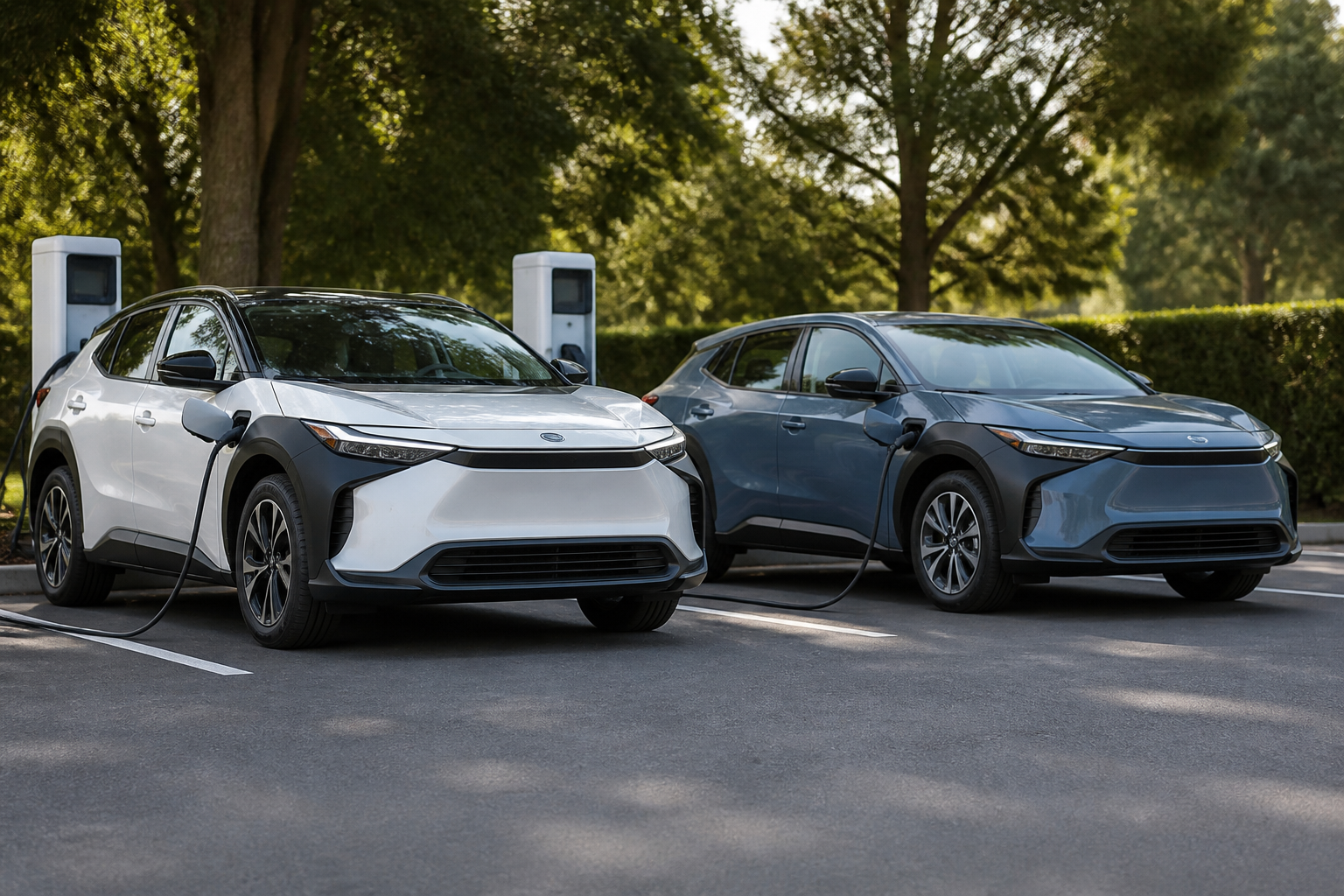
The electric vehicle market continues its rapid expansion, bringing with it a host of new models that challenge consumers and insurers alike. Among the latest contenders are the Toyota bZ4X and the Subaru Solterra, two all-electric SUVs that share a common platform but carry distinct brand identities and feature sets. For prospective owners, understanding how these differences translate into insurance costs is crucial. This article provides a detailed comparative analysis, exploring the factors that influence insurance premiums for the Toyota bZ4X and Subaru Solterra for drivers across the United States.
Introduction: Shared Platform, Distinct Premiums?
The Toyota bZ4X and Subaru Solterra represent a significant collaboration between two automotive giants. Built on the e-TNGA platform, these vehicles share fundamental engineering, including their battery packs, electric motors, and core chassis. This shared foundation might lead one to assume identical insurance costs. However, the reality is often more nuanced. While the underlying architecture is similar, differences in branding, standard safety features, trim levels, and even perceived risk by insurers can lead to variations in premiums.
As Senior Auto Insurance Analyst at EV Insurance Hub, my role is to dissect these complexities. We'll examine how the unique attributes of each model, from their advanced driver-assistance systems (ADAS) to their repairability, play a role in determining what you'll pay to insure them. Our goal is to provide a clear, data-led perspective for US consumers considering either of these compelling new electric SUVs.
Understanding EV Insurance Cost Drivers
Before diving into the specifics of the bZ4X and Solterra, it's essential to understand the broader factors that influence electric vehicle insurance costs. EVs, in general, tend to have higher insurance premiums than their internal combustion engine (ICE) counterparts, primarily due to:
- Higher Purchase Price: EVs typically have a higher sticker price, which directly translates to higher replacement costs for insurers in the event of a total loss.
- Specialized Parts & Repair: Components like battery packs, electric motors, and advanced electronics are expensive and require specialized technicians for repair or replacement. This increases labor costs and parts costs.
- Advanced Technology: Many EVs come standard with sophisticated ADAS, which, while enhancing safety, can be costly to repair or recalibrate after an accident.
- Weight Distribution and Performance: The heavy battery packs often lead to a lower center of gravity, which can reduce rollover risk but also means higher impact forces in certain collisions, potentially increasing damage severity. EVs also often have high torque and rapid acceleration, which can sometimes be associated with higher accident frequency in certain demographic groups.
- Limited Repair Network: The network of qualified EV repair shops is still growing, which can lead to longer repair times and higher costs due to less competition.
These factors are universal to most EVs, but the degree to which they impact specific models like the bZ4X and Solterra can vary.
Toyota bZ4X: Insurance Profile & Considerations
The Toyota bZ4X marks Toyota's significant entry into the dedicated EV market. As a brand, Toyota has a long-standing reputation for reliability and lower repair costs for its ICE vehicles, which historically has translated to favorable insurance rates. However, the bZ4X introduces new variables.
Key insurance considerations for the Toyota bZ4X:
- Toyota Safety Sense 3.0: The bZ4X comes standard with Toyota's comprehensive suite of active safety features, including a Pre-Collision System with Pedestrian Detection, Lane Departure Alert with Steering Assist, Full-Speed Range Dynamic Radar Cruise Control, and more. While these systems are designed to prevent accidents, their complexity can make post-collision repairs more expensive.
- Battery & Drivetrain: The bZ4X is available in both front-wheel drive (FWD) and all-wheel drive (AWD) configurations. The FWD model utilizes a single 150 kW motor, while the AWD version features two 80 kW motors. The battery capacity is either 71.4 kWh (FWD) or 72.8 kWh (AWD). The cost of replacing or repairing these high-voltage components is a significant factor in insurance pricing.
- Body Structure & Materials: Toyota's engineering focuses on crashworthiness. The use of high-strength steel and advanced materials in the bZ4X's body shell contributes to occupant safety but can also increase the cost of structural repairs.
- Parts Availability: As a new model, the availability and cost of specific bZ4X body panels and EV-specific components might initially be higher compared to more established Toyota models, potentially influencing early insurance premiums.
Initial data, based on early market availability and actuarial projections, suggests that average annual full-coverage insurance for the Toyota bZ4X could range from approximately $1,800 to $2,600, depending on factors such as driver profile, location, and chosen coverage limits. This is a general estimate and individual rates will vary significantly.
Subaru Solterra: Insurance Profile & Considerations
The Subaru Solterra is Subaru's first global all-electric SUV, leveraging the same e-TNGA platform as the bZ4X. Subaru's brand identity is strongly linked to all-wheel drive capability and robust safety, particularly through its EyeSight Driver Assist Technology. The Solterra carries this legacy forward.
Key insurance considerations for the Subaru Solterra:
- Standard Symmetrical All-Wheel Drive: Unlike the bZ4X, the Solterra comes standard with Subaru's Symmetrical All-Wheel Drive system, featuring two 80 kW motors. This standard AWD might be perceived by some insurers as a slightly lower risk due to enhanced traction and control, especially in adverse weather conditions.
- Subaru EyeSight Driver Assist Technology: The Solterra incorporates the latest iteration of EyeSight, which includes features like Pre-Collision Braking, Lane Departure Prevention, and Advanced Adaptive Cruise Control. Similar to Toyota Safety Sense, these systems are beneficial for accident prevention but can escalate repair costs if damaged.
- Off-Road Capability: Subaru emphasizes the Solterra's X-MODE and generous ground clearance, hinting at some off-road prowess. While this enhances utility, it could theoretically expose the vehicle to different types of damage (e.g., undercarriage) if owners frequently engage in more adventurous driving, though this is a minor factor for most insurers.
- Brand Perception: Subaru has a strong reputation for safety and durability. This brand perception, combined with the standard AWD, could potentially contribute to slightly more favorable insurance rates in some instances, though the EV-specific factors remain dominant.
For the Subaru Solterra, initial estimates for average annual full-coverage insurance premiums are projected to be in a similar range to the bZ4X, approximately $1,900 to $2,700. Again, this is a broad estimate, and numerous personal and geographical factors will dictate actual pricing.
Comparing the bZ4X and Solterra: Key Insurance Factors
Despite their shared platform, several subtle differences can influence the insurance costs for the Toyota bZ4X and Subaru Solterra:
- Standard AWD: The Solterra's standard symmetrical AWD versus the bZ4X's optional AWD could be a minor differentiator. Insurers might view standard AWD as a safety advantage, potentially leading to slightly lower rates for the Solterra in some cases, particularly in regions with harsh weather.
- ADAS Implementation: While both vehicles feature advanced safety suites, there can be subtle differences in sensor placement, calibration, and the specific algorithms used. These nuances can affect repair costs and accident frequency data collected by the Highway Loss Data Institute (HLDI) over time.
- Trim Levels & Features: The specific features included in each trim level can impact the vehicle's overall value and the cost of replacing damaged components. For example, a higher trim with larger wheels, premium sound systems, or more advanced lighting might have a slightly higher replacement value.
- Claim History & Loss Data: As newer models, both vehicles are still accumulating sufficient claims data for insurers to fully assess their loss experience. Over time, if one model demonstrates a statistically significant lower frequency or severity of claims compared to the other, its insurance rates could diverge. Factors like driving behavior of typical owners (e.g., if Solterra owners are perceived as more cautious due to Subaru's brand image) could play a role.
- Market Availability & Sales Volume: The volume of sales for each model can influence parts availability and repair network development. A vehicle with higher sales volume might benefit from quicker parts distribution and more competitive repair pricing in the long run.
It's crucial to remember that these are often subtle influences. The overriding factors for both vehicles will be their EV nature, purchase price, and advanced technology. The differences between the bZ4X and Solterra premiums are likely to be relatively small for most drivers, perhaps within a 5-10% variance, rather than dramatic disparities.
Estimating Insurance Costs for These EVs
Providing exact insurance costs for any vehicle, let alone new EV models, is impossible without specific driver data. However, we can outline the methodology and factors that insurers use to generate quotes for the Toyota bZ4X and Subaru Solterra:
- Driver Profile: Age, driving history (accidents, violations), credit score (where permitted by law), marital status, and gender can all significantly impact premiums. A driver with a clean record and good credit will generally pay less.
- Location: Insurance rates vary dramatically by state, city, and even zip code. Areas with higher crime rates, more traffic congestion, or frequent natural disasters will typically have higher premiums.
- Coverage Levels: The type and amount of coverage you choose are paramount. Full coverage (collision and comprehensive) will always be more expensive than liability-only. Higher deductibles can lower premiums.
- Annual Mileage: Drivers who log fewer miles annually may qualify for lower rates.
- Discounts: Insurers offer various discounts, such as multi-policy, good student, anti-theft device, and EV-specific discounts.
Based on industry averages for new EVs and considering the vehicles' MSRPs (which typically start in the low to mid-$40,000s for base models and can reach into the low $50,000s for higher trims), drivers can anticipate full-coverage annual premiums to fall within the range of $1,800 to $2,700. This range is a broad estimate and serves as a starting point for comparison. For context, the national average for all vehicle types in the US hovers around $1,700-$2,000 annually for full coverage, indicating that these new EVs are indeed at the higher end of the spectrum, consistent with new electric vehicle trends.
Strategies to Reduce Your EV Insurance Premiums
Even with potentially higher EV insurance costs, there are proactive steps you can take to mitigate the expense for your Toyota bZ4X or Subaru Solterra:
- Shop Around Extensively: This is the single most effective strategy. Get quotes from at least 3-5 different insurance providers. Rates can vary by hundreds of dollars for the exact same coverage.
- Bundle Policies: Combine your auto insurance with home, renters, or life insurance to qualify for multi-policy discounts.
- Increase Your Deductibles: Opting for a higher deductible (e.g., $1,000 instead of $500) can significantly lower your premium, but ensure you can comfortably afford to pay it out-of-pocket if you need to file a claim.
- Maintain a Clean Driving Record: Avoid accidents and traffic violations. A spotless record is one of the best ways to keep premiums low.
- Inquire About EV-Specific Discounts: Some insurers offer discounts specifically for electric vehicles, recognizing their environmental benefits or certain safety features.
- Utilize Telematics Programs: Many insurers offer usage-based insurance programs (telematics) that monitor your driving habits. Safe drivers can earn significant discounts.
- Improve Your Credit Score: In most states, insurers use credit-based insurance scores. A higher score often leads to lower premiums.
- Consider Lowering Coverage on Older Vehicles: If you have an older, paid-off vehicle, you might consider dropping collision and comprehensive coverage to save money, though this is less applicable to a new EV.
By diligently applying these strategies, prospective owners of the Toyota bZ4X or Subaru Solterra can effectively manage their insurance expenditures, making the transition to electric vehicle ownership more financially accessible.
Key takeaways
- The Toyota bZ4X and Subaru Solterra, despite sharing a platform, may have slight insurance cost variations due to distinct features and brand perceptions.
- EV insurance premiums are generally higher due to greater vehicle value, specialized parts, and advanced technology repair costs.
- Expect annual full-coverage insurance for both models to range from approximately $1,800 to $2,700, depending on individual factors.
- The Solterra's standard AWD might offer a marginal insurance advantage in some cases compared to the bZ4X's optional AWD.
- Shopping around, bundling policies, and utilizing discounts are crucial strategies to mitigate higher EV insurance costs.
Frequently asked questions
Q.Is insurance for the Toyota bZ4X more expensive than for the Subaru Solterra?
While both vehicles share a platform, their insurance costs are likely to be very similar. Subtle differences in standard features, trim levels, and how insurers rate specific safety systems might lead to minor variations, but generally, expect them to be in a comparable price range.
Q.Why are insurance costs for new EVs like the bZ4X and Solterra generally higher?
New EVs typically have higher purchase prices, specialized and expensive components (like battery packs), and advanced technology that can be costly to repair or replace. The repair network for EVs is also still developing, contributing to higher overall repair costs that insurers factor into premiums.
Q.What factors most influence the insurance cost for these EV models?
The most significant factors include the vehicle's MSRP, the cost of its high-voltage battery and electric motors, the complexity and repair cost of its advanced driver-assistance systems (ADAS), and the availability of specialized repair facilities. Your personal driving history, location, and chosen coverage limits also play a major role.
Q.Can I get discounts for insuring my Toyota bZ4X or Subaru Solterra?
Yes, many insurers offer discounts that can apply to EVs. These include multi-policy discounts, good driver discounts, discounts for advanced safety features, and sometimes specific EV discounts. Inquiring about telematics programs can also help lower your premium if you're a safe driver.
References
Automotive journalist with 10+ years road-testing EVs and tracking model-by-model ownership costs.
Continue reading

Tesla Model Y Insurance Costs: What Owners Should Compare at Renewal: 2026-10-18 Update 1
Model-specific renewal checklist covering trim, location, repair networks, and driver-assistance assumptions. This is a fresh 2026-10-18 update: focus on what has changed recently, new data points, and current-year guidance — do not repeat the earlier article's coverage. Use this checklist to compare premiums, deductibles, repair support, and policy wording before renewal.

Tesla Model Y Insurance Costs: What Owners Should Compare at Renewal: 2026-10-17 Update 2
Model-specific renewal checklist covering trim, location, repair networks, and driver-assistance assumptions. This is a fresh 2026-10-17 update: focus on what has changed recently, new data points, and current-year guidance — do not repeat the earlier article's coverage. Use this checklist to compare premiums, deductibles, repair support, and policy wording before renewal.

Tesla Model Y Insurance Costs: What Owners Should Compare at Renewal: 2026-10-16 Update 3
Model-specific renewal checklist covering trim, location, repair networks, and driver-assistance assumptions. This is a fresh 2026-10-16 update: focus on what has changed recently, new data points, and current-year guidance — do not repeat the earlier article's coverage. Use this checklist to compare premiums, deductibles, repair support, and policy wording before renewal.