
EV Depreciation: How It Shapes Your Insurance Payouts and Premiums
Electric vehicles are revolutionizing personal transportation, but their unique depreciation patterns can significantly influence insurance costs and claims. Understanding this dynamic is crucial for every EV owner.

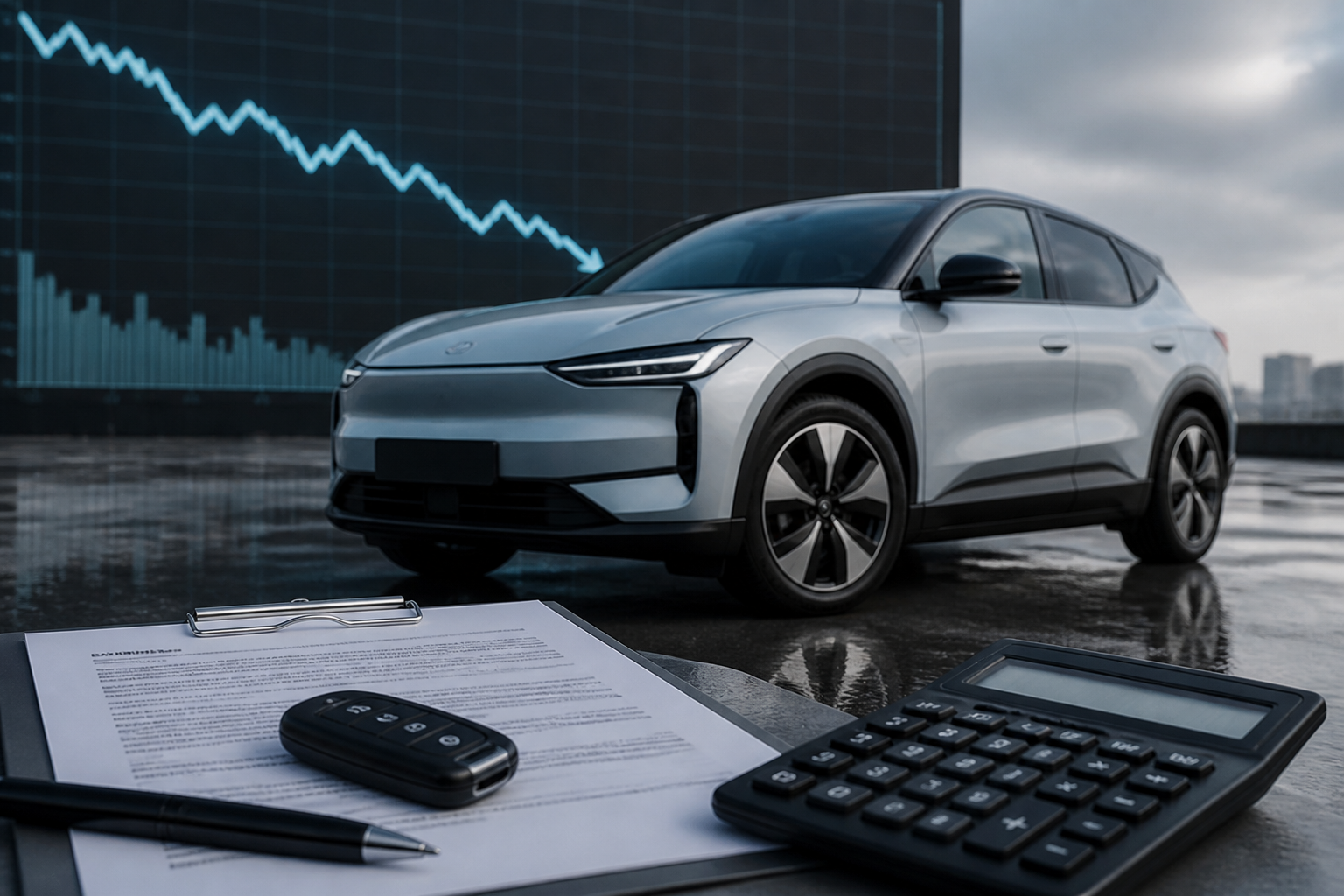
Electric vehicles (EVs) represent a significant leap in automotive technology, offering environmental benefits and a unique driving experience. However, beneath the sleek designs and silent powertrains lies a financial reality that can significantly impact their owners: depreciation. Unlike traditional gasoline cars, EVs often exhibit different depreciation curves, particularly concerning their battery components and rapidly evolving technology. This distinct pattern has profound implications for auto insurance, affecting both the premiums you pay and the financial recovery you might receive in the event of a total loss. As a licensed P&C insurance analyst with over a decade of experience in the EV market, I frequently encounter questions from owners about how their vehicle's diminishing value truly affects their coverage. This article will dissect the intricate relationship between EV depreciation and insurance, offering insights into how insurers assess risk and value, and what strategies drivers can employ to safeguard their investment.
Understanding EV Depreciation: More Than Just Miles
Depreciation is the reduction in the value of an asset over time. For vehicles, this is a natural process influenced by age, mileage, condition, and market demand. However, for electric vehicles, several unique factors accelerate or alter this process. The most prominent is the battery. While EV batteries are designed for longevity, their capacity can degrade over time, impacting range and performance. This 'battery degradation' is a form of depreciation distinct from the wear and tear on other vehicle components. Insurers, when calculating a vehicle's actual cash value (ACV), must consider this.
Furthermore, the rapid pace of technological advancement in the EV sector plays a significant role. A model year-old EV might be superseded by a newer version with significantly longer range, faster charging, or more advanced driver-assistance systems. This quick obsolescence can cause the value of older models to drop more sharply than their internal combustion engine (ICE) counterparts, which typically see more incremental updates. For example, a 2020 EV model might have a 200-mile range, while a 2023 model from the same manufacturer could boast 300+ miles, making the older model less desirable and thus less valuable in a short period.
Market demand also fluctuates, influenced by factors like gas prices, government incentives, and the expansion of charging infrastructure. High gas prices might boost EV demand, slowing depreciation, while a sudden influx of new, more affordable EV models could depress the value of existing used EVs. These dynamics create a more volatile depreciation landscape for EVs compared to the more predictable patterns seen in the traditional automotive market.
How Depreciation Impacts Insurance Premiums
The relationship between depreciation and insurance premiums is not always direct, but it is certainly influential. Insurers primarily calculate premiums based on risk: the likelihood of a claim and the potential cost of that claim. A significant component of the potential claim cost is the vehicle's replacement value or repair cost. While a depreciating asset might seem to imply lower premiums over time, this isn't always the case for EVs, especially in their early years.
Here's how depreciation indirectly influences premiums:
- Initial High Value: EVs typically have a higher sticker price than comparable ICE vehicles. This higher initial value means higher potential repair costs for parts like battery packs or complex electronic systems, leading to higher initial premiums. Even as the vehicle depreciates, the cost of specialized EV parts and labor for repairs often remains high. For instance, replacing a damaged battery pack can cost anywhere from $10,000 to $20,000+, depending on the model, even for an older EV.
- Repair Costs vs. ACV: As an EV depreciates, its Actual Cash Value (ACV) decreases. However, the cost of repairing complex EV components, particularly the battery and advanced electronics, does not necessarily decrease at the same rate. This can lead to situations where a relatively minor collision could result in a 'total loss' declaration because the repair cost exceeds a certain percentage (often 50-70%) of the vehicle's depreciated ACV. Insurers factor in this higher likelihood of a total loss due to disproportionately high repair costs when setting premiums.
- Parts Availability and Labor: The specialized nature of EV repairs means fewer qualified technicians and a less mature aftermarket parts ecosystem. This can drive up repair costs and times, which insurers account for. While this isn't directly depreciation, it's a factor that influences the total cost of ownership and thus insurance, and it's exacerbated when an EV's value drops faster than its repairability costs.
In the early years of EV ownership, despite the vehicle's value dropping, premiums might not fall proportionally. This is because the underlying risk factors – high repair costs, specialized parts, and the potential for total loss due to battery damage – remain significant. Insurers are constantly refining their models as more data becomes available, but the unique characteristics of EV technology continue to shape premium calculations.
Total Loss Payouts: The Depreciation Dilemma
When an EV is declared a total loss – meaning the cost to repair it exceeds its Actual Cash Value (ACV) or a certain percentage of it – the insurance payout is based on that ACV. This is where accelerated EV depreciation can hit owners hard. The ACV is typically defined as the replacement cost minus depreciation. For EVs, this can be particularly problematic due to the factors discussed earlier.
Consider a scenario:
- You purchase a new EV for $55,000.
- After two years, due to rapid technological advancements and typical automotive depreciation, its market value (ACV) might have dropped to $35,000.
- You are involved in an accident, and the repair estimate is $28,000, largely due to battery casing damage and structural issues.
- If your insurer's total loss threshold is 70% of ACV (i.e., $24,500), your vehicle would be declared a total loss.
- Your payout would be the ACV of $35,000, minus your deductible (e.g., $1,000), resulting in a net payout of $34,000.
This payout might be significantly less than what you still owe on a loan, or what you anticipated receiving to purchase a comparable replacement vehicle. This gap is precisely why understanding depreciation is vital. The rapid depreciation, especially for newer EV models that quickly become 'older' tech, can create a substantial financial shortfall for owners in a total loss scenario.
Furthermore, the methodology for assessing battery health in a total loss scenario is still evolving. While some insurers are beginning to factor in detailed battery diagnostics, many still rely on broader market data. If your battery has degraded less than average, but the market value of your model has dropped significantly due to new releases, you could still receive a lower payout than you might expect based on the vehicle's actual condition.
Key Factors Influencing EV Depreciation
While general automotive depreciation principles apply, several specific elements exert a stronger influence on EV residual values:
- Battery Technology and Health: This is arguably the most critical factor. As battery technology improves, older, less energy-dense batteries become less desirable. The actual health (State of Health - SOH) of a battery, which indicates its remaining capacity, directly impacts an EV's resale value. Vehicles with robust battery management systems and minimal degradation tend to hold value better.
- Range and Charging Speed: The 'range anxiety' factor is real for many potential used EV buyers. Vehicles with higher initial range and faster charging capabilities tend to depreciate slower. As charging infrastructure expands and charging speeds increase, older models with slower charging rates may see accelerated depreciation.
- Software and Feature Updates (OTA): EVs are increasingly defined by their software. Vehicles that receive frequent Over-The-Air (OTA) updates, adding new features or improving existing ones (e.g., infotainment, ADAS, even performance), can potentially retain value better than those with static software. This keeps them feeling 'newer' for longer.
- Brand and Model Popularity: Established EV brands with strong resale markets (e.g., certain Tesla models) often depreciate slower than niche or less popular models. High demand for specific models can significantly buoy their residual values.
- Government Incentives and Policy Changes: Tax credits and rebates for new EVs can depress the value of used EVs. If a new EV qualifies for a significant incentive, it makes a used EV of the same model less attractive unless its price drops proportionally. Changes in environmental regulations or charging infrastructure policies can also impact demand and, consequently, depreciation.
- Repairability and Parts Availability: EVs that are known to be difficult or expensive to repair, or for which parts are scarce, will naturally depreciate faster as the risk and cost of future ownership increase for potential buyers. This is a growing concern for insurers and consumers alike.
- Mileage and Condition: Like ICE vehicles, higher mileage and poor physical condition will always accelerate depreciation. However, for EVs, very high mileage might also raise concerns about battery degradation, even if the battery has been well-maintained.
Understanding these drivers allows consumers to make more informed purchasing decisions and anticipate the trajectory of their EV's value. For insurers, these factors are critical inputs into their underwriting models and ACV calculations.
Strategies to Mitigate Depreciation's Insurance Impact
While you can't stop depreciation, you can employ several strategies to minimize its financial impact, particularly concerning insurance. These strategies focus on protecting your investment and ensuring adequate coverage.
- Consider Gap Insurance: This is perhaps the most direct way to protect against depreciation in a total loss scenario. Gap insurance covers the 'gap' between your vehicle's Actual Cash Value (ACV) and the amount you still owe on your auto loan or lease. If your EV depreciates faster than your loan principal decreases, gap insurance can prevent you from owing money on a car you no longer own. It's especially recommended for new EVs, as they experience the steepest depreciation in their first few years.
- New Car Replacement Coverage: Some insurers offer an endorsement that, for a specified period (e.g., 1-3 years) after purchase, will replace your totaled new vehicle with a brand new one of the same make and model, rather than just paying out its depreciated ACV. This is a powerful hedge against early depreciation.
- Leasing vs. Buying: Leasing an EV can be a strategic move if you're concerned about depreciation. With a lease, you're essentially paying for the depreciation that occurs during the lease term. At the end of the lease, you return the vehicle, and the depreciation risk falls on the leasing company, not you. This offers predictability and allows you to upgrade to the latest EV technology more frequently.
- Maintain Your EV Meticulously: A well-maintained EV, especially one with a documented service history that includes battery health checks, will generally hold its value better. This includes following manufacturer recommendations for charging (e.g., not consistently charging to 100% or draining to 0% if possible) to preserve battery health. While this doesn't directly impact premiums, it can improve your ACV in a total loss scenario.
- Shop for Insurers Familiar with EVs: Not all insurers have equally sophisticated models for pricing EV risk or assessing EV value. Some may still be using more generalized data. Seek out insurers who have a strong presence in the EV market, as they may offer more nuanced valuations and potentially better coverage options for unique EV risks. They might also be more adept at assessing battery health for accurate ACV.
- Regularly Review Your Coverage: As your EV ages, its value changes. While premiums may not drop proportionally, it's wise to review your comprehensive and collision coverage limits periodically. You might consider adjusting your deductible or coverage levels as your vehicle's ACV declines, though always ensure you maintain adequate protection for repair costs.
- Consider Aftermarket Warranties for Battery: While not insurance, some third-party providers offer extended battery warranties for used EVs. This can make your vehicle more attractive on the resale market, potentially mitigating some depreciation, and providing peace of mind.
By proactively addressing the impact of depreciation through these strategies, EV owners can better protect their financial interests and navigate the evolving landscape of electric vehicle insurance.
The Future of EV Depreciation and Insurance
The EV market is still maturing, and with it, the understanding of depreciation and its insurance implications. We are seeing several trends that will likely shape the future:
- Standardization of Battery Health Reporting: As EVs become more prevalent, there's a growing need for standardized, verifiable battery health reports. This would allow insurers and buyers to accurately assess an EV's true condition, leading to more precise ACV calculations and potentially more stable residual values. Companies like Recurrent Auto are already working on this, providing battery health scores for used EVs.
- Evolving Repair Ecosystem: The expansion of EV-specific repair facilities and the increasing availability of aftermarket EV parts will gradually bring down repair costs. This could reduce the likelihood of total loss declarations for minor to moderate damage, potentially stabilizing or even lowering comprehensive and collision premiums over time.
- Data-Driven Underwriting: Insurers are continuously collecting more data on EV performance, accident rates, repair costs, and depreciation. This will lead to increasingly sophisticated and accurate underwriting models, allowing for more precise premium calculations that better reflect the actual risk and value of specific EV models. Telematics data, which monitors driving behavior, will also play a larger role in personalizing premiums.
- Increased Focus on Circular Economy: As EV batteries reach their end-of-life in vehicles, the growth of second-life applications (e.g., grid storage) and advanced recycling techniques could create additional value streams. This might indirectly support higher residual values for EVs, as the battery itself retains value beyond its automotive use.
- Policy and Regulatory Influence: Government incentives for EV adoption, infrastructure development, and potential regulations around battery longevity or repairability will continue to influence market dynamics and, by extension, depreciation.
As the EV industry matures, the depreciation curves may stabilize, potentially mirroring those of ICE vehicles more closely, albeit with unique considerations for battery health and technology cycles. For now, EV owners should remain informed, proactive, and work closely with their insurance providers to ensure their coverage aligns with the evolving value of their electric vehicle.
Key takeaways
- EVs can depreciate faster than traditional cars, primarily due to rapid technological advancements and battery degradation.
- Accelerated EV depreciation can lead to a significant gap between your loan balance and insurance payouts in a total loss scenario.
- High repair costs for specialized EV components often keep insurance premiums relatively high, even as the vehicle's value declines.
- Gap insurance and new car replacement coverage are crucial tools to mitigate the financial risks associated with EV depreciation.
- Meticulous maintenance, understanding battery health, and choosing insurers familiar with EVs can help protect your investment and optimize coverage.
Frequently asked questions
Q.Does EV battery degradation affect my insurance payout?
Yes, battery degradation can indirectly affect your insurance payout for a total loss. Insurers determine the Actual Cash Value (ACV) based on market value, which is influenced by battery health and overall vehicle condition. A significantly degraded battery can lower the vehicle's market value and thus your payout.
Q.Is gap insurance necessary for an electric vehicle?
Gap insurance is highly recommended for electric vehicles, especially new ones. EVs often depreciate faster than traditional cars in their early years, creating a larger gap between what you owe on a loan and the vehicle's Actual Cash Value if it's totaled. Gap insurance protects you from this financial shortfall.
Q.Do EV insurance premiums decrease as the car depreciates?
While the vehicle's value decreases, EV insurance premiums may not drop proportionally, especially in the first few years. This is because high repair costs for specialized EV components, particularly the battery, and the potential for a total loss due to disproportionate repair expenses, remain significant risk factors for insurers.
Q.How do insurers determine the Actual Cash Value (ACV) of a totaled EV?
Insurers determine an EV's ACV by considering factors like age, mileage, overall condition, and market data for comparable vehicles. For EVs, specific attention is also paid to battery health, range, and the impact of rapid technological advancements on the model's desirability and value.
Q.Can I get new car replacement coverage for my EV?
Some insurance providers offer 'new car replacement' coverage as an endorsement, typically for new vehicles within their first few years of ownership. This coverage ensures that if your EV is totaled, the insurer will pay for a brand-new replacement of the same make and model, rather than just its depreciated ACV.
References
Market analyst with 22+ years tracking P&C insurance regulation, M&A and emerging-risk trends.
Continue reading
Decoding EV Insurance for Emerging Southeast Asian Markets: Thailand, Vietnam & Indonesia
This article will analyze the nascent but rapidly growing EV insurance markets in key Southeast Asian countries like Thailand, Vietnam, and Indonesia. It will examine unique regulatory landscapes, local repair infrastructure challenges, and emerging coverage solutions, providing insights for international insurers and early adopters in these regions. Use this checklist to compare premiums, deductibles, repair support, and policy wording before renewal.

EV Insurance Market Trends: Why Premiums Are Still Volatile
Market analysis of repair severity, battery diagnostics, parts availability, and changing insurer appetite. Use this checklist to compare premiums, deductibles, repair support, and policy wording before renewal.
EV Insurance for UK Drivers: Navigating Unique Regulations & Cost Factors in 2026
Electric vehicle adoption in the UK continues its rapid ascent, but insuring these advanced machines presents a distinct set of considerations for British drivers. Understanding the nuances of EV insurance within the UK's regulatory framework is crucial for securing adequate and cost-effective coverage.