
Porsche Macan EV vs. Audi Q6 e-tron: Decoding Projected Insurance Costs for Germany's New Luxury EVs
As the highly anticipated Porsche Macan EV and Audi Q6 e-tron prepare to hit the market, understanding their potential insurance costs is crucial for savvy buyers. We delve into the factors that will shape premiums for these luxury German EVs.

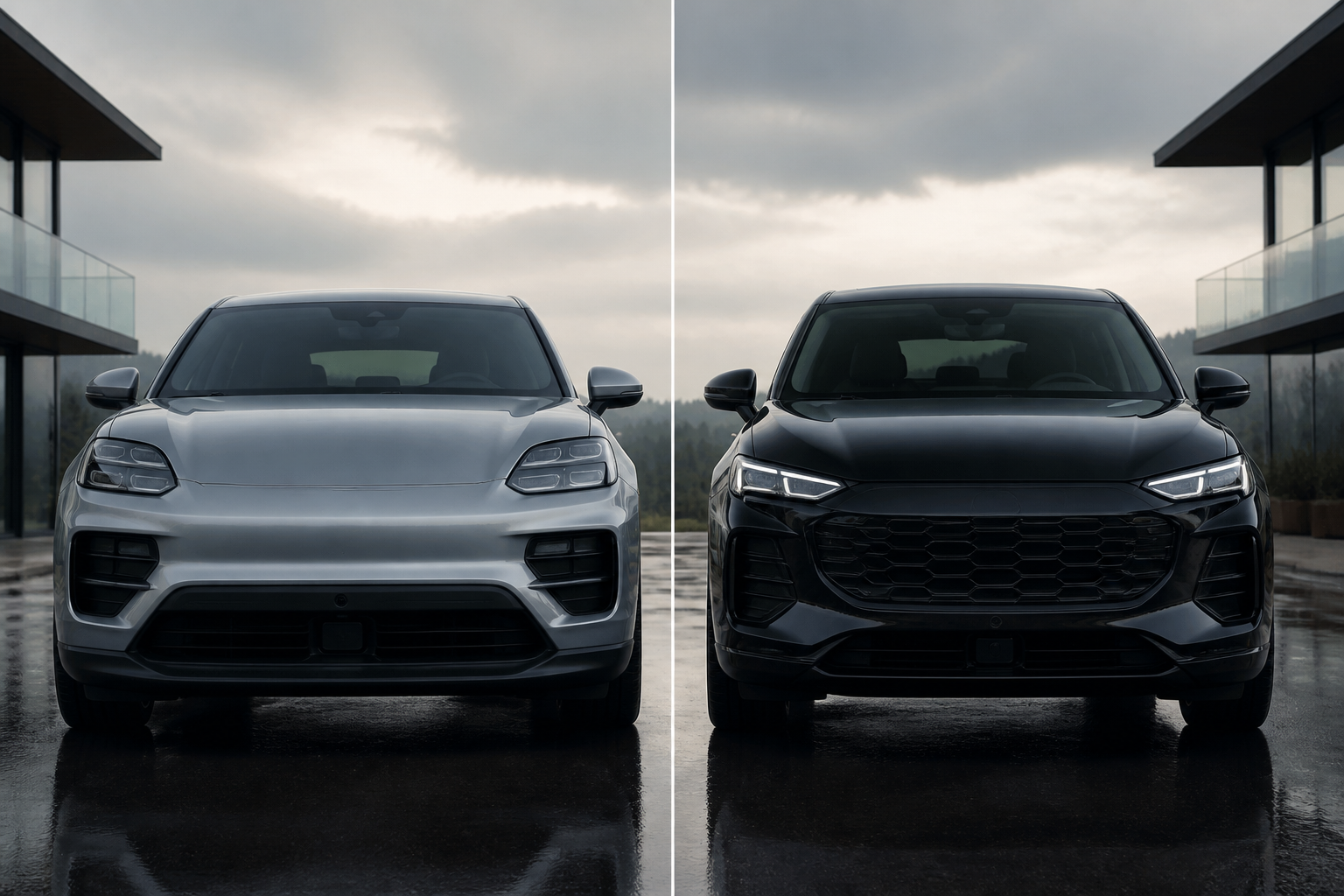
The electric vehicle market is rapidly evolving, and with the imminent arrival of the Porsche Macan EV and Audi Q6 e-tron, luxury performance is going electric in a big way. These two highly anticipated models, built on the advanced Premium Platform Electric (PPE) architecture, promise exhilarating performance and cutting-edge technology. However, for prospective owners, a critical consideration beyond the sticker price is the ongoing cost of insurance. As a Senior Auto Insurance Analyst at EV Insurance Hub, my role is to provide a data-informed outlook, dissecting the factors that will influence premiums for these sophisticated German EVs, helping you make an informed purchasing decision.
Introduction: The Dawn of German Luxury EVs
The automotive landscape is undergoing a profound transformation, with electrification at its core. German manufacturers, long synonymous with luxury, engineering prowess, and performance, are now fully embracing this shift. The Porsche Macan EV and Audi Q6 e-tron represent a significant leap forward, not just for their respective brands, but for the luxury EV segment as a whole. Both models are poised to deliver a premium driving experience, combining powerful electric powertrains with advanced connectivity and safety features.
However, the sophisticated nature of these vehicles introduces unique considerations for insurance underwriters. The blend of high-performance electric components, intricate battery systems, lightweight yet expensive materials, and a plethora of advanced driver-assistance systems (ADAS) creates a distinct risk profile. Understanding how these elements translate into insurance premiums is essential for anyone considering these vehicles. Our analysis will focus on the underlying engineering, potential repair scenarios, and the technological innovations that will shape their insurance cost.
The PPE Platform: A Shared Foundation, Divergent Paths
At the heart of both the Macan EV and Q6 e-tron lies the Premium Platform Electric (PPE) architecture, co-developed by Porsche and Audi. This dedicated EV platform is designed for high-performance electric vehicles, featuring an 800-volt electrical system, advanced battery technology, and sophisticated thermal management. While sharing a common foundation, each brand tailors the platform to its unique identity, leading to differences that will subtly, yet significantly, impact insurance costs.
The shared PPE platform brings several insurance-relevant commonalities:
- 800V Architecture: This allows for ultra-fast charging but also means specialized, high-voltage training is required for technicians, potentially increasing labor costs for repairs.
- Large Battery Packs: Both vehicles are expected to feature substantial battery capacities (around 100 kWh gross), which are among the most expensive components of an EV. Damage to these packs, even minor, can lead to significant repair or replacement costs.
- Integrated Powertrain Components: The electric motors, inverters, and gearboxes are often integrated into compact, high-performance units. While efficient, their complexity can make repairs more intricate and costly than traditional internal combustion engine (ICE) counterparts.
Despite the shared platform, Porsche's positioning as a performance-luxury brand means the Macan EV will likely command higher premiums than the Audi Q6 e-tron, even with similar underlying technology. This is often due to:
- Higher Sticker Price: Porsche models typically have a higher base MSRP, which directly correlates with higher comprehensive and collision coverage costs due to the increased replacement value.
- Performance Profile: Porsche's performance-oriented tuning and higher power outputs (e.g., Macan Turbo EV with up to 630 hp) can lead to higher perceived accident risk by insurers.
- Parts Cost & Availability: While sharing some components, Porsche-specific parts and body panels are often more expensive and may have longer lead times, impacting repair costs and vehicle downtime.
The Audi Q6 e-tron, while premium, is generally positioned for a broader luxury market, potentially benefiting from slightly lower repair costs and a less aggressive performance profile in its standard trims, which can translate to comparatively more favorable insurance rates.
Repair Complexities and Cost Drivers
The advanced engineering of the Macan EV and Q6 e-tron, while delivering performance and safety, also introduces significant complexities for accident repair, which directly influences insurance premiums. Insurers analyze the likelihood and cost of claims, and modern EVs, especially luxury ones, present a unique challenge.
Key repair-related cost drivers for these models include:
- Battery Pack Integrity: The large battery packs are central to the vehicle's structure and performance. Even minor impacts can necessitate extensive diagnostics to ensure battery safety and integrity. If a battery pack is deemed unsafe or damaged, replacement costs can range from $20,000 to $40,000+, representing a substantial portion of the vehicle's value. Specialized facilities and highly trained technicians are required for battery-related repairs.
- Integrated Drive Units: The electric motors and associated power electronics are often integrated into compact units. Damage to these can require full unit replacement rather than component-level repair, driving up costs.
- Material Science: Both vehicles utilize advanced materials for weight reduction and structural rigidity, such as high-strength steel, aluminum, and potentially carbon fiber composites. Repairing or replacing these materials often requires specialized tools, techniques, and certified body shops, leading to higher labor rates and parts costs.
- Structural Design: The PPE platform likely incorporates sophisticated crash structures designed to protect the battery and occupants. Repairing these structures after a collision can be complex and time-consuming, requiring precise jig alignment and welding, which adds to the overall repair bill.
- Software and Calibration: Post-collision, many EV systems, including ADAS sensors, battery management systems, and powertrain controls, require diagnostic scans and recalibration. This software-intensive repair process adds labor hours and requires specific manufacturer tools.
Insurers consider the 'severity' of potential claims. A minor fender bender in an ICE vehicle might be a few thousand dollars, but in a high-tech EV like the Macan or Q6 e-tron, even a low-speed impact could trigger expensive sensor replacements, body panel repairs with specialized materials, and extensive diagnostics for the high-voltage system. This elevated potential for high-cost repairs is a primary factor in higher comprehensive and collision premiums compared to similarly priced ICE vehicles.
ADAS Features and Their Insurance Impact
Both the Porsche Macan EV and Audi Q6 e-tron will come equipped with a comprehensive suite of Advanced Driver-Assistance Systems (ADAS). These features, such as adaptive cruise control, lane-keeping assist, automatic emergency braking, and parking assist, are designed to enhance safety and convenience. However, they also introduce a dual impact on insurance costs.
On one hand, ADAS features can theoretically reduce the frequency and severity of accidents. Systems like automatic emergency braking (AEB) have been shown to significantly decrease rear-end collisions. Insurers often look favorably upon vehicles with proven ADAS, potentially offering discounts for certain features. For example, the Insurance Institute for Highway Safety (IIHS) and Highway Loss Data Institute (HLDI) have published studies indicating that AEB can reduce property damage liability claims by 19% and bodily injury liability claims by 4%.
On the other hand, the sensors and cameras that enable ADAS are often located in vulnerable areas, such as bumpers, grilles, and windshields. Damage to these components, even from minor collisions, can be expensive to repair or replace. A new windshield on an ADAS-equipped vehicle, for instance, requires not just glass replacement but also recalibration of the forward-facing camera, significantly increasing the cost compared to a non-ADAS vehicle. Radar sensors in bumpers are similarly costly to repair or replace and recalibrate.
The complexity of these systems means:
- Higher Parts Costs: Individual ADAS sensors (radar, lidar, ultrasonic, cameras) are expensive components.
- Specialized Labor: Recalibration requires specific diagnostic tools and trained technicians, adding to labor costs.
- Increased Repair Time: The diagnostic and calibration processes extend the time a vehicle spends in the repair shop.
In the initial years of these models, insurers will be carefully monitoring accident data to determine the net effect of ADAS. While they may reduce accident frequency, the increased cost of repairing ADAS components could offset some of those savings, particularly for luxury vehicles where these systems are highly integrated and proprietary. Owners should anticipate that the sophisticated ADAS suites on the Macan EV and Q6 e-tron will contribute to the overall comprehensive and collision insurance premiums.
Projected Insurance Cost Outlook
Predicting exact insurance premiums for unreleased models is challenging, as rates are dynamic and influenced by numerous factors, including driver profile, location, and specific coverage choices. However, based on the characteristics of the Porsche Macan EV and Audi Q6 e-tron, we can provide a data-informed projection of their likely insurance cost ranges in the US market.
Drawing parallels with existing luxury EVs and high-performance ICE vehicles from these brands, prospective owners should prepare for premiums that are likely 15% to 30% higher than comparable ICE SUVs in their respective segments, and potentially 5% to 15% higher than some established premium EVs. This projection is based on:
- High MSRP: Both vehicles will have starting prices well into the $70,000-$80,000+ range, with top trims easily exceeding $100,000. Higher vehicle value directly translates to higher comprehensive and collision premiums.
- Performance Capabilities: Porsche's reputation for performance, even in an SUV, means the Macan EV will likely be rated in a higher performance category. The Audi Q6 e-tron, while also quick, may fall into a slightly lower risk category.
- Repair Cost Factors: As discussed, the PPE platform's advanced technology, specialized materials, 800V architecture, and complex ADAS systems will lead to higher repair costs and potentially higher total loss thresholds.
- Parts Availability: As new models, parts availability might initially be less robust than for established models, potentially leading to longer repair times and higher costs for specific components.
- Battery Replacement Risk: The significant cost of battery replacement in the event of severe damage is a major underwriting concern, driving up comprehensive coverage.
For a typical driver with a clean record in a moderate-risk zip code, annual full coverage insurance premiums for the Audi Q6 e-tron could range from approximately $2,800 to $4,500. The Porsche Macan EV, due to its higher performance positioning and brand premium, could see annual premiums ranging from $3,500 to $6,000+, especially for higher-trim performance variants. These figures are estimates and can vary significantly.
It's crucial to obtain quotes as soon as these vehicles become available for purchase, as actual rates will depend on real-world claims data as the models accumulate mileage on the roads.
Strategies for Mitigating EV Insurance Costs
While luxury EVs like the Macan EV and Q6 e-tron naturally come with higher insurance costs, prospective owners are not without options to help manage their premiums. Strategic choices and proactive measures can lead to significant savings.
Here are several strategies to consider:
- Shop Around Extensively: This is the single most important piece of advice for any car insurance. Do not settle for the first quote. Obtain quotes from at least 3-5 different insurers. Premiums can vary widely between carriers for the exact same coverage on the same vehicle, sometimes by hundreds or even thousands of dollars annually.
- Bundle Policies: Many insurers offer discounts for bundling auto insurance with other policies, such as homeowners, renters, or umbrella insurance. This can often result in savings of 5% to 20% on your total premium.
- Increase Deductibles: Opting for higher deductibles on your comprehensive and collision coverage (e.g., from $500 to $1,000 or $2,500) will lower your annual premium. Just ensure you have sufficient savings to cover the higher out-of-pocket expense if you need to file a claim.
- Leverage EV-Specific Discounts: Some insurers offer discounts specifically for electric vehicles, recognizing their environmental benefits or certain safety features. Inquire about these.
- Maintain a Clean Driving Record: A history free of accidents and moving violations is the most powerful factor in securing lower insurance rates. Safe driving habits are rewarded.
- Consider Telematics/Usage-Based Insurance: Some insurers offer programs that monitor your driving habits (speed, braking, mileage) via a mobile app or device. Safe drivers can earn discounts, potentially up to 30%.
- Install Safety & Security Devices: While the Macan EV and Q6 e-tron will come with advanced security features, additional approved anti-theft devices (e.g., tracking systems) can sometimes qualify for further discounts.
- Inquire About Low Mileage Discounts: If you don't commute long distances or drive frequently, you might qualify for a low-mileage discount.
- Review Coverage Annually: Your insurance needs and the vehicle's value change over time. Review your policy annually to ensure you're not over-insured or under-insured, and to take advantage of new discounts or market rate changes.
By proactively implementing these strategies, prospective owners can significantly influence their overall insurance expenditure for these sophisticated new German EVs.
Conclusion: Making Informed Decisions
The Porsche Macan EV and Audi Q6 e-tron are poised to set new benchmarks in the luxury electric SUV segment, offering a compelling blend of performance, technology, and German engineering. However, the sophisticated nature of these vehicles, underpinned by the advanced PPE platform, directly translates into a higher insurance risk profile compared to many other vehicles on the road. The combination of high purchase price, complex 800V electrical systems, expensive battery packs, advanced materials, and intricate ADAS features all contribute to projected higher comprehensive and collision premiums.
Prospective buyers should budget for annual full coverage insurance costs that are likely to be in the range of $2,800 to $4,500 for the Audi Q6 e-tron and $3,500 to $6,000+ for the Porsche Macan EV in the US market, depending heavily on individual driver factors and location. These figures are substantial and represent a significant ongoing ownership cost.
My advice, as always, is to approach the purchase with a full understanding of these financial implications. Don't let the excitement of a new luxury EV overshadow the practical aspects of ownership. Obtain multiple insurance quotes, inquire about all available discounts, and consider your driving habits. By doing so, you can enjoy the cutting-edge performance and luxury of these German electric vehicles without unexpected financial surprises, ensuring a truly informed and satisfying ownership experience.
Key takeaways
- Porsche Macan EV and Audi Q6 e-tron insurance premiums will be higher than comparable ICE SUVs due to high MSRPs and advanced technology.
- The shared PPE platform introduces complex 800V systems and expensive battery packs, driving up potential repair costs for both models.
- Sophisticated ADAS features, while enhancing safety, also contribute to higher repair expenses due to costly sensor replacement and recalibration.
- Expect annual full coverage premiums for the Audi Q6 e-tron to range from $2,800-$4,500, and the Porsche Macan EV from $3,500-$6,000+ in the US.
- Mitigate costs by shopping multiple insurers, bundling policies, increasing deductibles, and leveraging EV-specific discounts.
Frequently asked questions
Q.Why are luxury EVs like the Macan EV and Q6 e-tron more expensive to insure?
Luxury EVs are more expensive to insure due to their high purchase price, which increases replacement costs. They also feature complex battery systems, advanced materials, and numerous ADAS sensors that are costly to repair or replace after an accident, leading to higher claim severities for insurers.
Q.Will the shared PPE platform make insurance costs identical for the Macan EV and Q6 e-tron?
No, while the shared PPE platform means common underlying technology and repair complexities, insurance costs will differ. Porsche's higher brand premium, typically higher MSRPs, and performance-oriented positioning will likely result in higher premiums for the Macan EV compared to the Audi Q6 e-tron.
Q.Do ADAS features reduce or increase insurance premiums for these EVs?
ADAS features have a dual impact. They can reduce accident frequency, potentially lowering certain aspects of your premium. However, the high cost of repairing or recalibrating these sophisticated sensors and cameras after even minor collisions often offsets those savings, contributing to higher comprehensive coverage costs.
Q.What is the most effective way to lower insurance costs for a new luxury EV?
The most effective way is to shop around extensively and obtain quotes from multiple insurance carriers. Additionally, increasing your deductibles, bundling policies, maintaining a clean driving record, and inquiring about EV-specific discounts can significantly help mitigate costs.
References
Automotive journalist with 10+ years road-testing EVs and tracking model-by-model ownership costs.
Continue reading

Tesla Model Y Insurance Costs: What Owners Should Compare at Renewal: 2026-10-04 Update 1
Model-specific renewal checklist covering trim, location, repair networks, and driver-assistance assumptions. This is a fresh 2026-10-04 update: focus on what has changed recently, new data points, and current-year guidance — do not repeat the earlier article's coverage. Use this checklist to compare premiums, deductibles, repair support, and policy wording before renewal.
Ford F-150 Lightning vs. Ram 1500 REV: A 2026 EV Insurance Cost Analysis
As electric pickup trucks gain traction, understanding their insurance costs becomes crucial. This analysis dives into the Ford F-150 Lightning and the upcoming Ram 1500 REV, projecting 2026 insurance premiums based on key EV-specific factors.
Decoding EV Insurance for the Polestar 3 & Volvo EX90: A 2026 Cost Analysis
With the introduction of the Polestar 3 and Volvo EX90, this article will analyze anticipated insurance premium factors for these new, high-tech electric SUVs. We'll examine how their advanced safety features, repair costs, and performance specifications might influence 2026 insurance rates compared to established luxury EV competitors. Use this checklist to compare premiums, deductibles, repair support, and policy wording before renewal.