
UK EV Insurance Showdown: Tesla Model 3 vs. Hyundai Ioniq 5 – What Drives Your Premiums?
For UK drivers weighing the Tesla Model 3 against the Hyundai Ioniq 5, understanding insurance costs is crucial. This analysis breaks down the unique factors influencing premiums for these popular EVs across the British Isles.

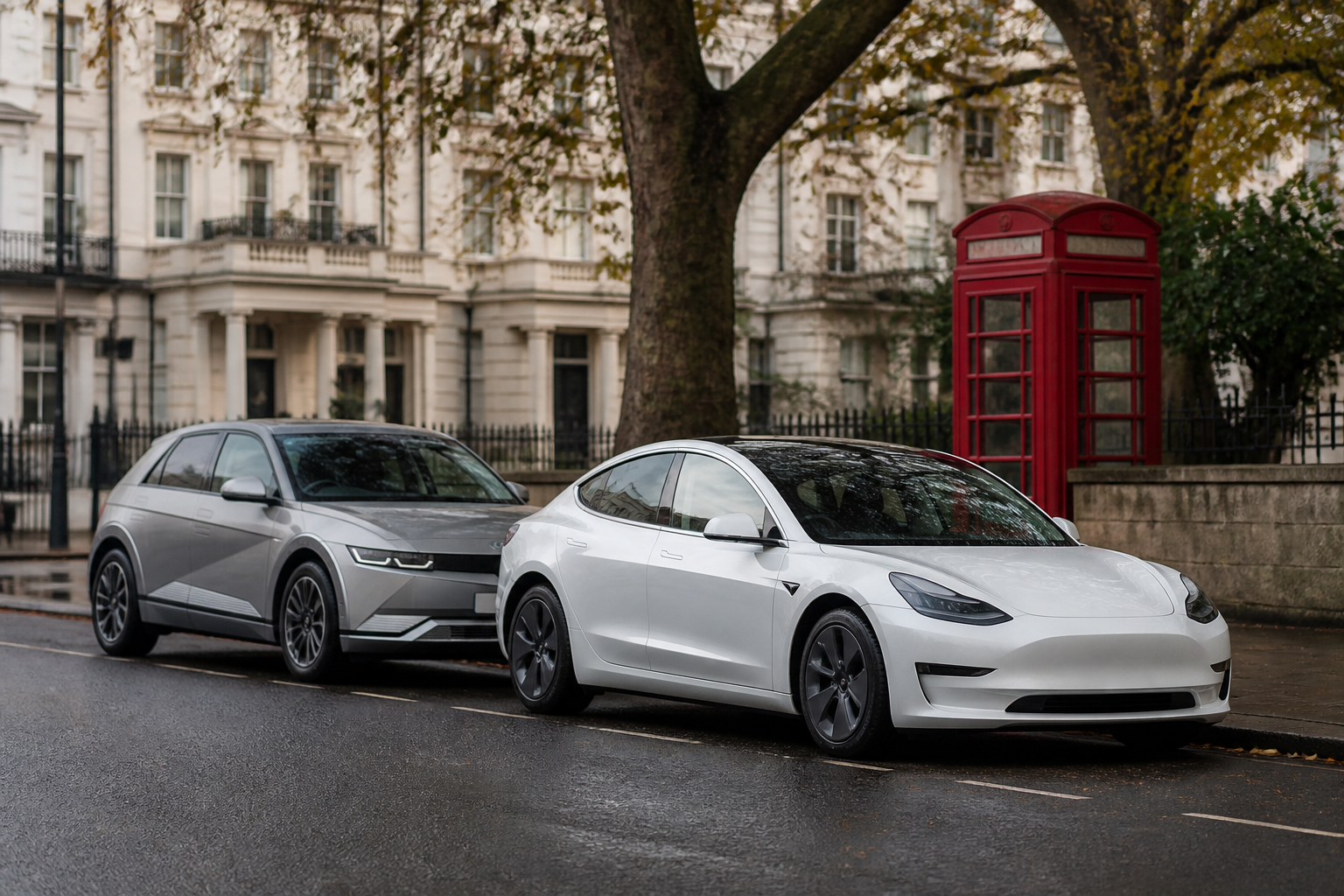
As the UK accelerates its transition to electric vehicles, prospective buyers are increasingly scrutinizing the total cost of ownership, with insurance being a significant component. For those torn between two of the most compelling EV options – the sleek Tesla Model 3 and the retro-futuristic Hyundai Ioniq 5 – understanding how insurance premiums are calculated is paramount. This analysis dives deep into UK-specific insurance rating factors, dissecting why these popular models might command different premiums and offering insights into typical cost ranges.
Introduction: Navigating the UK EV Insurance Landscape
The UK automotive market has embraced electric vehicles with enthusiasm, driven by government incentives, environmental consciousness, and advancements in EV technology. However, the insurance landscape for these cutting-edge cars is still evolving, often presenting a different cost profile compared to their internal combustion engine (ICE) counterparts. Insurers are continually refining their models to accurately assess the unique risks associated with EVs, leading to varying premium structures across different makes and models.
For UK drivers, the decision between a Tesla Model 3 and a Hyundai Ioniq 5 isn't just about range, performance, or aesthetics; it's also about the financial implications over the vehicle's lifespan. Insurance costs can significantly impact monthly budgets, making a thorough understanding of these expenses essential before committing to a purchase. Our goal here is to provide a balanced, data-informed perspective on what UK drivers can expect when insuring these two prominent electric vehicles.
The Contenders: Tesla Model 3 vs. Hyundai Ioniq 5
Both the Tesla Model 3 and the Hyundai Ioniq 5 represent significant leaps in electric vehicle engineering, yet they appeal to slightly different segments of the market and possess distinct characteristics that influence insurance premiums. The Model 3, a pioneer in mass-market premium EVs, is known for its minimalist interior, advanced software, impressive performance, and extensive Supercharger network. The Ioniq 5, on the other hand, stands out with its distinctive design, spacious interior, ultra-fast charging capabilities thanks to its 800V architecture, and vehicle-to-load (V2L) functionality.
While both are highly sought-after, their differences in design, repair complexity, and market positioning play a crucial role in how insurers view them. For instance, Tesla's integrated technology and proprietary repair network can sometimes lead to higher repair costs, a factor that directly impacts insurance premiums. The Ioniq 5, while also advanced, may benefit from a more conventional dealer service network in some regions, potentially influencing repair logistics and costs.
Key UK Insurance Rating Factors for EVs
In the UK, car insurance premiums are determined by a complex interplay of factors, many of which are amplified or altered when it comes to electric vehicles. Insurers use a sophisticated algorithm to assess risk, and for EVs, several specific elements come into play:
- ABI Insurance Group Rating: All cars sold in the UK are assigned to an insurance group from 1 (cheapest) to 50 (most expensive) by the Group Rating Panel, administered by Thatcham Research. This rating considers factors like vehicle performance, safety features, repair costs, and parts availability. EVs often fall into higher groups due to their power, technology, and repair specifics.
- Vehicle Value: EVs typically have a higher purchase price than comparable ICE vehicles. A more expensive car generally means higher potential payout for total loss or significant damage, leading to higher premiums.
- Repair Costs and Parts Availability: This is a major factor for EVs. Battery packs are expensive to replace or repair, and specialized EV components (e.g., electric motors, advanced electronics) require specific training and equipment. Tesla, in particular, has a reputation for high repair costs due to integrated systems and potentially proprietary parts and repair methods.
- Performance and Power: Many EVs, including the Model 3 and Ioniq 5, offer instant torque and rapid acceleration, placing them in higher performance categories which insurers associate with a higher risk of accidents.
- Security Features: Advanced security systems can lower premiums, but the desirability of certain EV models can also make them targets for theft, counteracting this benefit.
- Driver Demographics: As with any vehicle, the driver's age, driving history (no-claims discount), occupation, and postcode significantly impact premiums. Younger, less experienced drivers or those in high-crime areas will face higher costs.
- Annual Mileage: Higher mileage typically correlates with increased risk of accidents, leading to higher premiums.
- Charging Habits and Location: While not a primary rating factor, some insurers may consider where and how you charge your EV, especially if it's a public charger in a high-risk area, though this is less common than other factors.
Why EVs Can Be More Expensive to Insure in the UK
It's a common observation that electric vehicles in the UK often carry higher insurance premiums than their petrol or diesel equivalents. This isn't an arbitrary decision by insurers but rather a reflection of several tangible risk factors:
- High Purchase Price: As mentioned, EVs generally cost more upfront. This directly translates to higher replacement costs for insurers in the event of a total write-off.
- Expensive Battery Replacement/Repair: The battery pack is the single most expensive component in an EV. Damage to the battery, even minor, can necessitate costly repairs or replacement, which can easily exceed the vehicle's market value in some scenarios, leading to total loss declarations.
- Specialized Repair Expertise and Equipment: EV repairs require technicians with specific training in high-voltage systems and specialized diagnostic tools. Not all garages are equipped or certified to handle EV repairs, limiting competition and potentially driving up labor costs.
- Parts Availability and Cost: While improving, the supply chain for some EV-specific parts can be less mature than for ICE vehicles, sometimes leading to longer repair times and higher parts costs. Tesla, in particular, has a more closed ecosystem, which can affect repair economics.
- Performance Characteristics: The rapid acceleration of many EVs means they are often classified in higher performance insurance groups, which insurers associate with a greater likelihood of severe accidents.
- Limited Claims Data: Despite growing popularity, EVs are still a relatively new segment compared to ICE cars. Insurers have less historical claims data to draw upon, leading to a more cautious, and often higher, initial risk assessment.
- Software and Technology: Advanced driver-assistance systems (ADAS) and sophisticated infotainment systems are standard in many EVs. While these enhance safety, their complex sensors and cameras are expensive to replace and recalibrate after even minor collisions.
These factors combine to create a higher perceived risk for insurers, which is then passed on to the consumer in the form of elevated premiums. However, as EV technology matures, repair networks expand, and claims data accumulates, these costs are expected to stabilize and potentially decrease over time.
Tesla Model 3: UK Insurance Cost Analysis
The Tesla Model 3 has been a game-changer in the EV market, but its insurance costs in the UK have been a frequent topic of discussion among owners and prospective buyers. Generally, the Model 3 tends to fall into higher insurance groups, typically ranging from Group 38 to 50 depending on the specific variant (e.g., Rear-Wheel Drive, Long Range, Performance) and year of manufacture. This places it firmly in the premium end of the insurance spectrum.
Several factors contribute to the Model 3's insurance profile:
- High Performance: Even the entry-level Model 3 offers brisk acceleration, with the Performance variant being exceptionally quick. This high power output contributes significantly to its higher insurance group rating.
- Advanced Technology and ADAS: Features like Autopilot and Full Self-Driving (FSD) capability, while enhancing safety, rely on a suite of cameras, sensors, and radar that are costly to repair or replace if damaged.
- Proprietary Repair Network and Parts: Tesla's approach to vehicle architecture and repair can sometimes mean that only authorized Tesla Service Centers or approved body shops can perform certain repairs, potentially leading to higher labor rates and parts costs compared to vehicles with a broader, more competitive repair ecosystem.
- Desirability and Theft Risk: As a high-value, desirable vehicle, the Model 3 can be perceived as a higher theft risk, although Tesla's advanced security features like Sentry Mode do offer some mitigation.
For a typical UK driver (e.g., 40-year-old with a clean driving record and several years of no-claims discount), annual comprehensive insurance premiums for a Tesla Model 3 could range anywhere from £1,000 to £2,500+. Younger drivers, those in urban areas, or those with less driving experience could see these figures rise significantly, potentially reaching £3,000 to £5,000+. The Model 3 Performance variant will almost invariably sit at the higher end of these ranges due to its increased power and value.
Hyundai Ioniq 5: UK Insurance Cost Analysis
The Hyundai Ioniq 5, with its distinctive styling and innovative features, has quickly become a popular choice among UK EV buyers. Its insurance profile, while still reflecting the general higher cost of EV insurance, often presents a slightly different picture compared to the Model 3. The Ioniq 5 typically falls into insurance groups ranging from Group 28 to 45, depending on the battery size, power output (e.g., Standard Range, Long Range, AWD), and trim level.
Factors influencing the Ioniq 5's insurance premiums include:
- Performance Levels: While capable, the Ioniq 5's acceleration, particularly in its lower-powered variants, is generally less extreme than the Model 3 Performance, which can place some models in slightly lower insurance groups. The AWD Long Range models will naturally be in higher groups.
- Repairability and Parts: Hyundai benefits from a more established and widespread dealer network in the UK, which can sometimes translate to more competitive repair costs and greater availability of parts compared to Tesla's more centralized approach. However, it still features advanced EV components and an expensive battery pack.
- Advanced Features: The Ioniq 5 also comes equipped with a comprehensive suite of ADAS features, such as Highway Driving Assist 2 and Blind-Spot View Monitor, which contribute to its overall safety but also to potential repair complexity and cost.
- Market Positioning: While premium, the Ioniq 5 is often perceived as a slightly less 'performance-oriented' or 'luxury' brand than Tesla, which can subtly influence theft risk perception among insurers.
For a similar typical UK driver profile (40-year-old, clean record, no-claims discount), comprehensive annual insurance premiums for a Hyundai Ioniq 5 could typically range from £800 to £2,000. Again, younger drivers or those in higher-risk categories could face premiums ranging from £2,500 to £4,000+. The entry-level, smaller battery variants are likely to be at the lower end of these ranges, while the more powerful AWD versions will be higher.
Comparing the Premiums: Model 3 vs. Ioniq 5
When directly comparing the two, the data generally suggests that the Tesla Model 3 tends to be more expensive to insure in the UK than a Hyundai Ioniq 5, assuming comparable driver profiles and coverage levels. This difference is largely attributable to:
- Higher Insurance Group Ratings: The Model 3 consistently occupies higher insurance groups (often 38-50) than the Ioniq 5 (typically 28-45).
- Perceived Repair Complexity and Cost: Tesla's integrated design and more proprietary repair ecosystem often lead to higher repair estimates from insurers. While the Ioniq 5 is also a complex EV, its repair network may offer slightly more competitive options.
- Performance Edge: The Model 3, especially its Performance variant, offers more aggressive acceleration, which insurers often link to a higher accident risk.
- Brand Perception and Theft Risk: Tesla, as a high-profile luxury/performance brand, can sometimes be seen as a greater target for theft, although robust security features are standard.
It's important to remember that these are general ranges and individual quotes will vary dramatically based on personal circumstances. However, as a rule of thumb, a UK driver can anticipate paying an average of 15-30% more to insure a Tesla Model 3 compared to a Hyundai Ioniq 5, particularly for the higher-spec variants of both vehicles. For example, where a Model 3 Long Range might cost £1,500, a comparable Ioniq 5 Long Range AWD might be closer to £1,200-£1,300 for the same driver.
Strategies to Reduce Your UK EV Insurance Costs
While EV insurance can be higher, UK drivers have several avenues to explore to mitigate these costs, regardless of whether they choose a Model 3 or an Ioniq 5:
- Shop Around Extensively: Never accept the first quote. Use multiple comparison websites and directly contact specialist EV insurers. The market for EV insurance is competitive and constantly changing.
- Increase Your Voluntary Excess: Agreeing to pay a larger amount yourself in the event of a claim can reduce your premium. Just ensure it's an amount you can comfortably afford.
- Improve Security: Install approved security devices (e.g., immobilizers, trackers) if your car doesn't have them as standard, or ensure your insurer is aware of factory-fitted advanced security like Tesla's Sentry Mode. Parking your car in a secure, garaged location overnight can also help.
- Build Your No-Claims Discount (NCD): A strong NCD is one of the most effective ways to reduce premiums. Protect it if possible.
- Consider Telematics/Black Box Insurance: For younger or less experienced drivers, a telematics policy that monitors driving behavior can lead to significant savings if you drive safely.
- Limit Annual Mileage: If you don't drive extensively, accurately estimating a lower annual mileage can reduce your premium, as less time on the road generally means less risk.
- Review Your Coverage: Ensure you're not paying for cover you don't need, but also don't skimp on essential protection, especially for an EV.
- Pay Annually: Paying your premium in one lump sum is almost always cheaper than monthly installments, which often include interest charges.
- Add an Experienced Driver: If you're a younger driver, adding an older, more experienced driver with a clean record to your policy as a named driver (not the main driver) can sometimes reduce costs.
- Choose a Lower-Spec Variant: If budget is a primary concern, opting for a lower-powered or less feature-rich variant of either the Model 3 or Ioniq 5 will likely result in a lower insurance group and thus a cheaper premium.
The Future of UK EV Insurance
The landscape of EV insurance in the UK is dynamic and constantly evolving. As more electric vehicles hit the roads, insurers are gaining a richer dataset for risk assessment. We anticipate several trends that could influence future premiums:
Firstly, the expansion of skilled EV repair networks and increased availability of non-OEM (Original Equipment Manufacturer) parts could lead to more competitive repair costs, potentially driving down premiums. Secondly, advancements in battery technology, including improved durability and more modular repair options, might reduce the likelihood of total write-offs for minor battery damage. Thirdly, the ongoing development of ADAS and autonomous driving features, coupled with compelling safety data, could eventually lead to discounts for vehicles that demonstrably reduce accident frequency and severity. Finally, as the second-hand EV market matures, insurers will gain better insights into depreciation rates and long-term risk, which could also impact pricing.
While the initial insurance costs for premium EVs like the Tesla Model 3 and Hyundai Ioniq 5 might seem high, the long-term trend is likely towards greater stability and potentially more competitive pricing as the market matures and data becomes more robust. For now, diligent comparison shopping and understanding the unique factors influencing EV premiums remain the best strategies for UK drivers.
Key takeaways
- Tesla Model 3 insurance in the UK is generally more expensive than Hyundai Ioniq 5, primarily due to higher insurance group ratings (38-50 for Model 3 vs. 28-45 for Ioniq 5).
- Key factors driving higher EV insurance premiums in the UK include high purchase price, costly battery repairs/replacements, specialized repair expertise, and rapid performance.
- The Model 3's proprietary repair network and higher performance variants contribute to its elevated insurance costs, often 15-30% more than a comparable Ioniq 5.
- Typical annual comprehensive premiums for a Model 3 in the UK can range from £1,000-£2,500+, while an Ioniq 5 might range from £800-£2,000 for a similar driver.
- UK drivers can mitigate EV insurance costs by extensively shopping around, increasing voluntary excess, enhancing security, and maintaining a strong no-claims discount.
Frequently asked questions
Q.Is Tesla insurance more expensive than other EVs in the UK?
Generally, yes, Tesla insurance in the UK tends to be at the higher end compared to many other EVs, including the Hyundai Ioniq 5. This is often due to their high performance, advanced technology, and specific repair network requirements which can lead to higher repair costs.
Q.Why are EVs generally more expensive to insure in the UK?
EVs are typically more expensive to insure in the UK due to their higher purchase price, the high cost of battery replacement or repair, the need for specialized repair expertise, and the often rapid acceleration putting them in higher insurance groups. Limited historical claims data also contributes to cautious pricing by insurers.
Q.What insurance group is the Hyundai Ioniq 5 in the UK?
The Hyundai Ioniq 5 typically falls into UK insurance groups ranging from 28 to 45, depending on the specific variant (e.g., battery size, power output, drivetrain) and trim level. Lower-powered, smaller battery versions will be in lower groups, while AWD Long Range models will be higher.
Q.What insurance group is the Tesla Model 3 in the UK?
The Tesla Model 3 generally occupies higher UK insurance groups, typically ranging from 38 to 50. The exact group depends on the specific model variant (e.g., Rear-Wheel Drive, Long Range, Performance) and its year of manufacture, with the Performance model being in the highest group 50.
Q.Can I reduce my EV insurance costs in the UK?
Yes, you can reduce your EV insurance costs in the UK by shopping around for quotes, increasing your voluntary excess, improving vehicle security, building a strong no-claims discount, considering telematics, and accurately estimating your annual mileage. Paying annually can also offer savings.
References
Automotive journalist with 10+ years road-testing EVs and tracking model-by-model ownership costs.
Continue reading
Decoding EV Insurance for Emerging Asian Brands: VinFast, BYD, and Xpeng Costs Analyzed
As new electric vehicle manufacturers like VinFast, BYD, and Xpeng enter Western markets, understanding their insurance costs is crucial for prospective buyers. This piece will analyze preliminary data and underwriting factors for these specific brands, comparing their premiums to established market players and highlighting unique coverage considerations. Use this checklist to compare premiums, deductibles, repair support, and policy wording before renewal.
Decoding EV Insurance for Emerging East Asian Brands: Zeekr, Nio, BYD Costs
This article will analyze the insurance costs for new and emerging East Asian EV brands like Zeekr, Nio, and BYD in key US, UK, and EU markets. We'll explore how their unique manufacturing, repair networks, and technology affect premiums compared to established brands, providing crucial insights for prospective buyers. Use this checklist to compare premiums, deductibles, repair support, and policy wording before renewal.
Decoding EV Insurance Costs: Genesis GV60 vs. Hyundai Ioniq 6 Analysis
Navigating electric vehicle insurance can be complex, especially with innovative models like the Genesis GV60 and Hyundai Ioniq 6 entering the market. This article breaks down the factors influencing their insurance premiums, offering crucial insights for potential owners.